The PIedmont boy scout camp
est. 1925
Piedmont Boy Scout Camp
The entrance gate at Piedmont Boy Scout Camp in the 1930s.
The Piedmont Boy Scout Camp (PBSC) originally opened in 1925 on Lake Lanier, South Carolina. Previous Army Lieutenant, Rudolph Melchoir “Bud” Schiele, became the first Scout executive of PBSC in 1924, a year and a half prior to the camp’s official opening. During his 33 years as Scout executive, he became extremely well respected by everyone involved: Scouts, counselors, and other Boy Scouts of America (BSA) executives. The camp closed on Lake Lanier in 1981 and eventually moved to a much larger 1500 acre plot of land in Rutherfordton, NC. It is now known as Camp Bud Schiele.
The piedmont council
The Piedmont Council was created in 1923 ultimately as a result of cultural changes in the 1920s. North Carolina emerged as the nation's leading textile-producing state, with most of its mills concentrated in the Piedmont region. Mill workers consisted of entire families, and thanks to increased funding in public education, children were no longer working 24 hour days. However, as family dynamics were rapidly changing in the country, behavioral issues among young boys started to become a concern, and Boy Scout troops were being requested by communities and mills were sponsoring them. In an effort to recruit boys from all socio-economic classes, the council leaders kept membership costs low and focused outreach in rural communities.
Original Piedmont Council patch.
R. M. “Bud” schiele
Once the Piedmont council was created, Rudolph Melchoir “Bud” Schiele, who was a Scout executive at the Georgia Carolina Council in Augusta at the time, was recommended to be the new Scout executive. He began work in Gastonia on January 15, 1924 and “the man they hired had extraordinary leadership abilities, an unwavering commitment to the principles of Scouting, and a realistic vision of how to establish Scouting throughout the territory” (Hamrick 15).
The Piedmont Boy Scout Camp (PBSC) opened on Lake Lanier, NC in 1925, and Bud Schiele had a large hand in the development of the camp and how it ran. Throughout his time at the summer camp, he was the driving force in making sure each and every Scout grew in not only their Scouting skills, but also as an overall person.
Bud Schiele married Lily Hobbs in 1916. Lily Schiele became Bud’s biggest supporter and heavily immersed herself in Scouting culture. At PBSC, she was the camp dietician, instructor of Indian lore, and director of the Hiawatha pageant. According to The Schiele Museum website, despite never having children, Lily “often said they parented over 100,000 boys.” In 1958, Bud retired from being Scout executive at age 65. In 1960, PBSC was renamed the Schiele Scout Reservation in order to recognize both Bud and Lily’s long renowned dedication to the council.
Bud Schiele in Scout executive uniform circa 1958.
“Bud Schiele firmly believed that scouting, underpinned by the Scout Oath and Law, made a difference in the lives of young boys by providing discipline, structure, positive role models, and self-confidence... He earned the respect and admiration of council presidents and Scoutmasters alike – all the while making the benefits of Scouting available to boys of all social classes.”
Bud & Lily Schiele at PBSC entrance.
The Schiele’s with their dog, Buttons, mid 1950’s.
The renamed camp entrance sign, Schiele Scout Reservation.
Summers at pbsc
For the first few seasons of camping at PBSC, permanent structures were still in the process of being built and the newly man-made Lake Lanier had not yet reached its expected water level. Within the first few camp seasons, 9 patrol huts were built, a mess hall that only fit 75 Scouts, and two springs served as the water supply which had to be transported by hand to the camp. By 1932, there were 13 now screened patrol cabins, a kitchen with attached mess hall to accommodate 140 Scouts, a sanitary latrine, a library, a nature museum, tennis court, athletic field, archery range, diving platform, and 6 large canoes. In 1936, the camp acquired 32 more acres and built 3 more patrol cabins and more athletic fields/courts. At this point, the PBSC was the biggest Scout camp in the Carolinas and an article stated that “the national Scouting experts regard it as the finest in the South” (Hamrick 54).
From 1925 to 1940, the Gastonia rotary club would donate various cabins, structures, and equipment to the camp each year. In 1943, a fire caused the dining lodge and kitchen to be destroyed. Due to a fundraising campaign announced to the community by Bud Schiele and the council president, the new structures were paid for, fully built, and open in time for the next summer season.
Earning merit badges, swimming, track and field events, required letters to family members at dinner, washing dishes, evening skits and assemblies, and cabin inspections were all activities that were kept throughout the camp’s time at Lake Lanier starting in 1925. Flag-lowering ceremonies, morning dips in the lake, tennis courts, baseball games, archery, and hikes to Hogback Mountain were also included, but all of these activities eventually stopped being a part of daily routine around the 1950s.
In 1950, The Piedmont Council had 274 troops and cub packs, with 5,328 being the total number of members. Out of these members, 141 troops and 2,217 Scouts and leaders attended PBSC (Hamrick 39).
Enjoy these pictures that showcase daily life at PBSC, sourced from Harvey James Hamrick’s book, Boy Scouting in the North Carolina Foothills and The Schiele Museum of Natural History website.
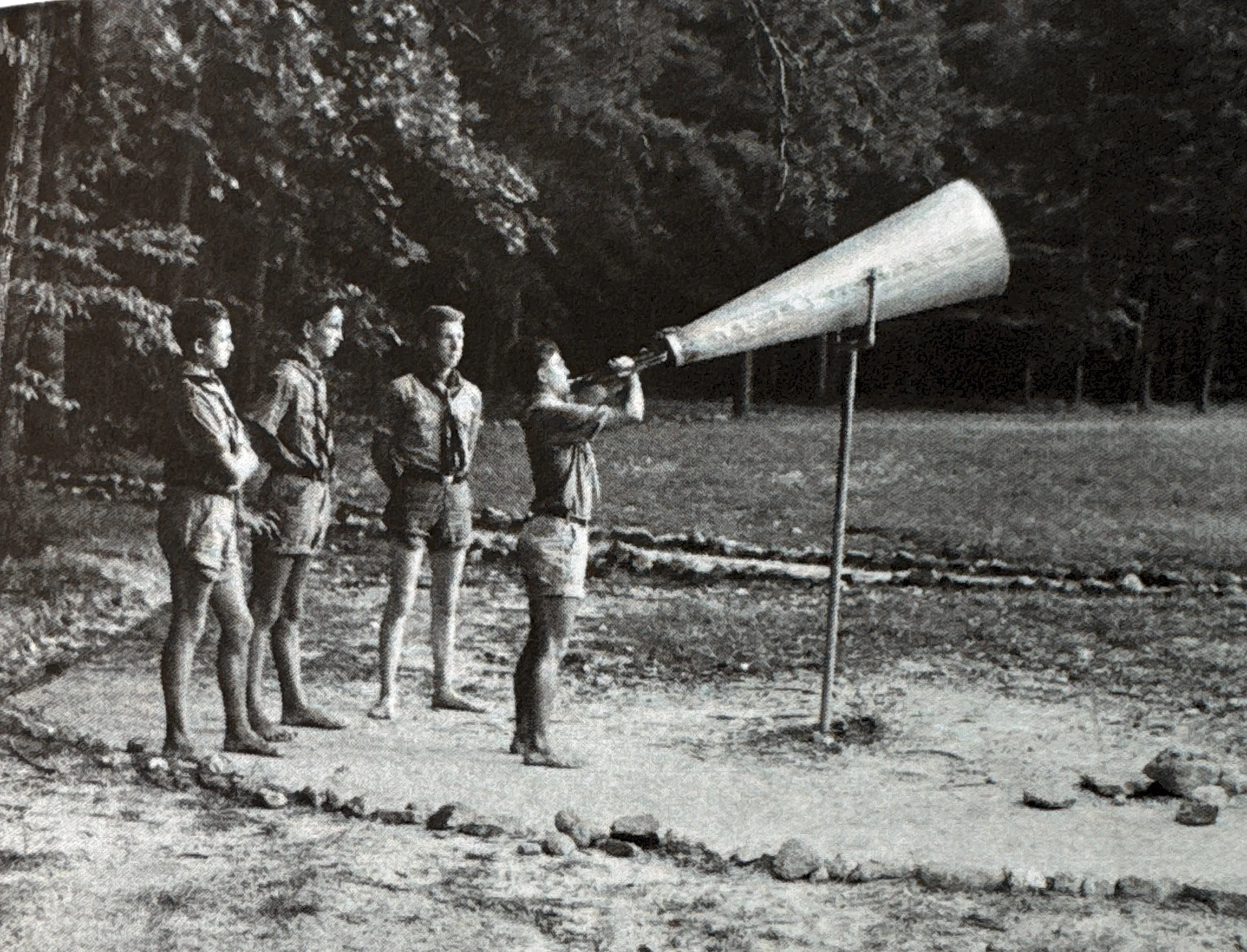
Scouts at the bugle megaphone
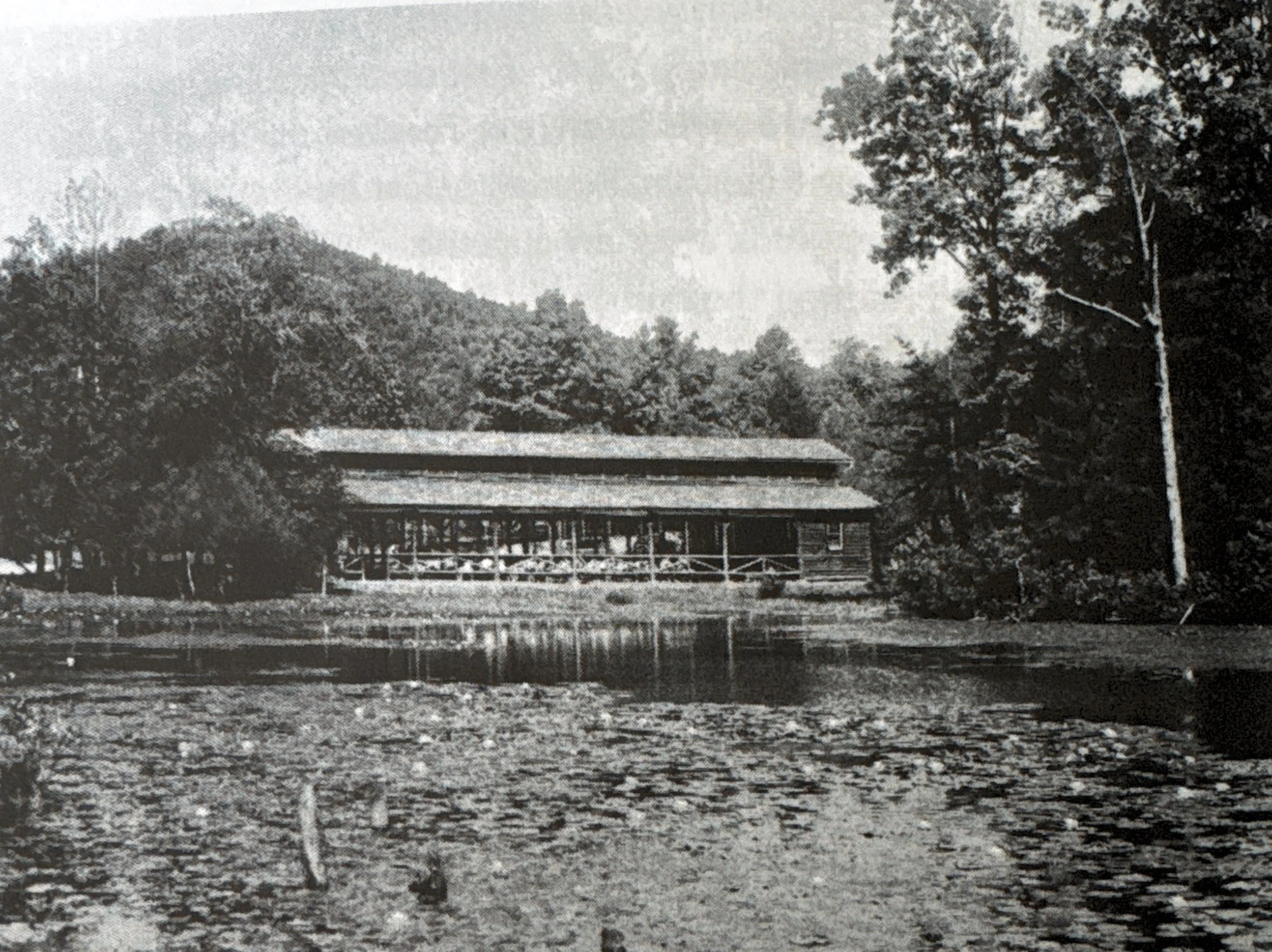
The assembly lodge
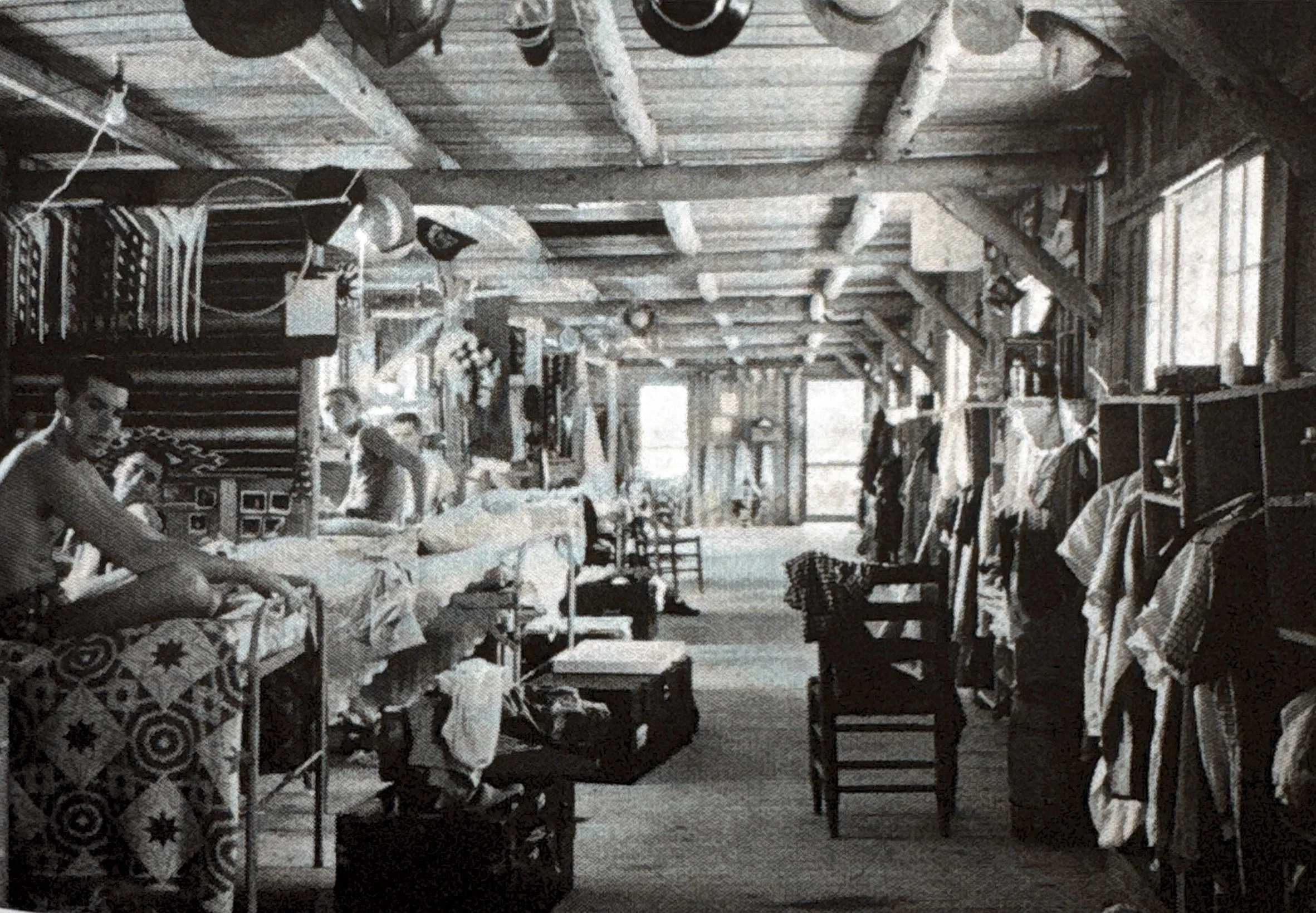
Scout counselor living quarters
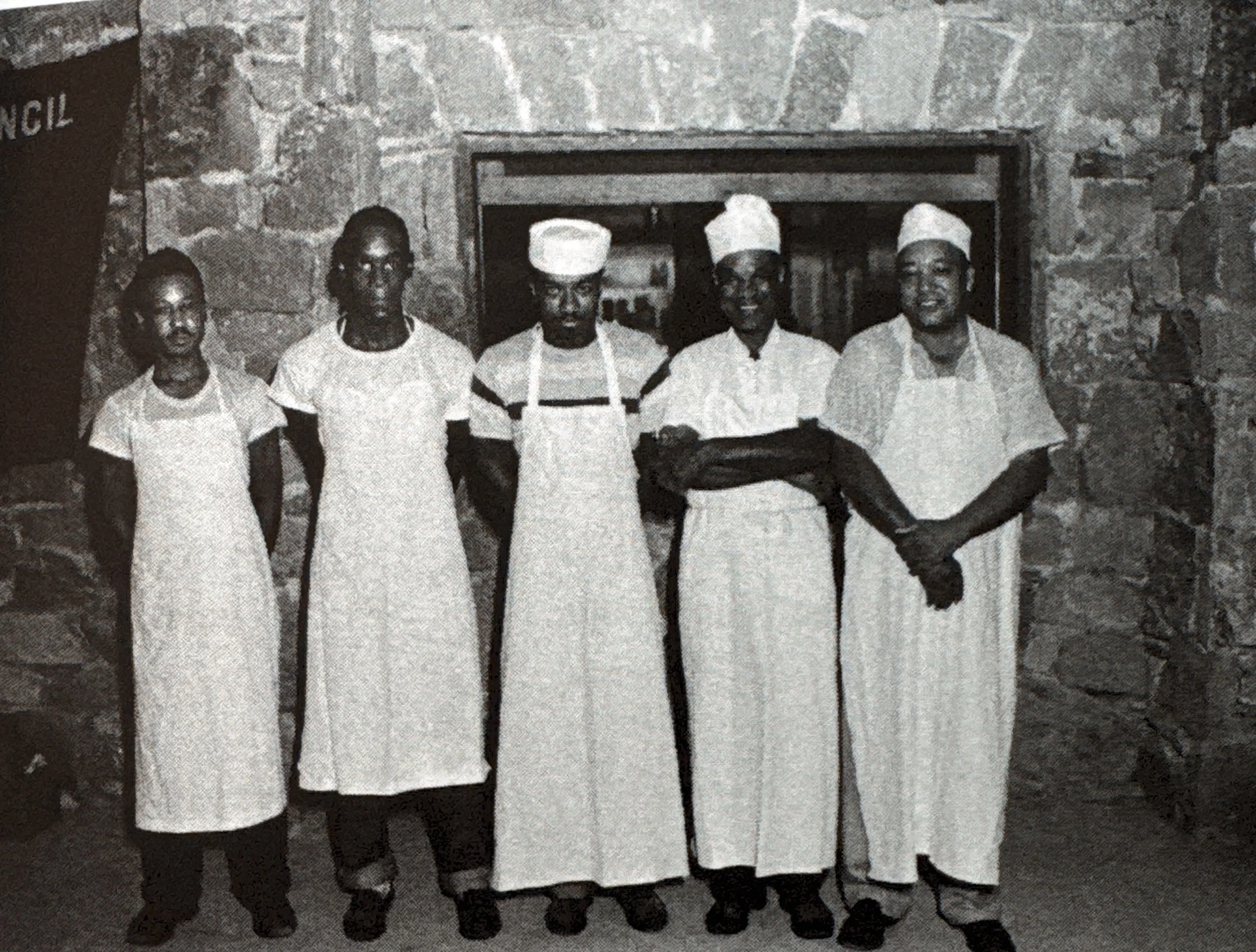
Cooking staff, 1950s
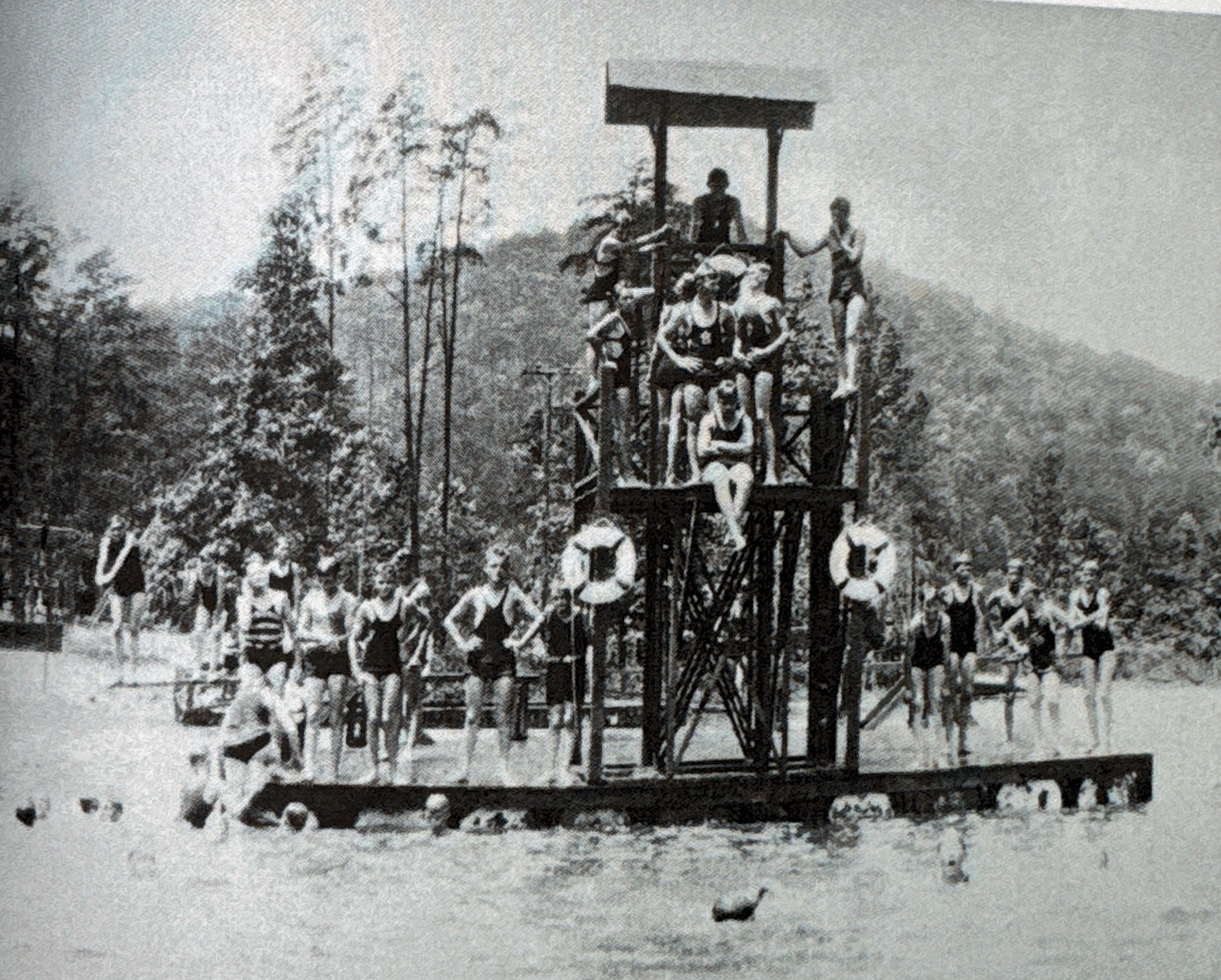
Diving structure, 1930s
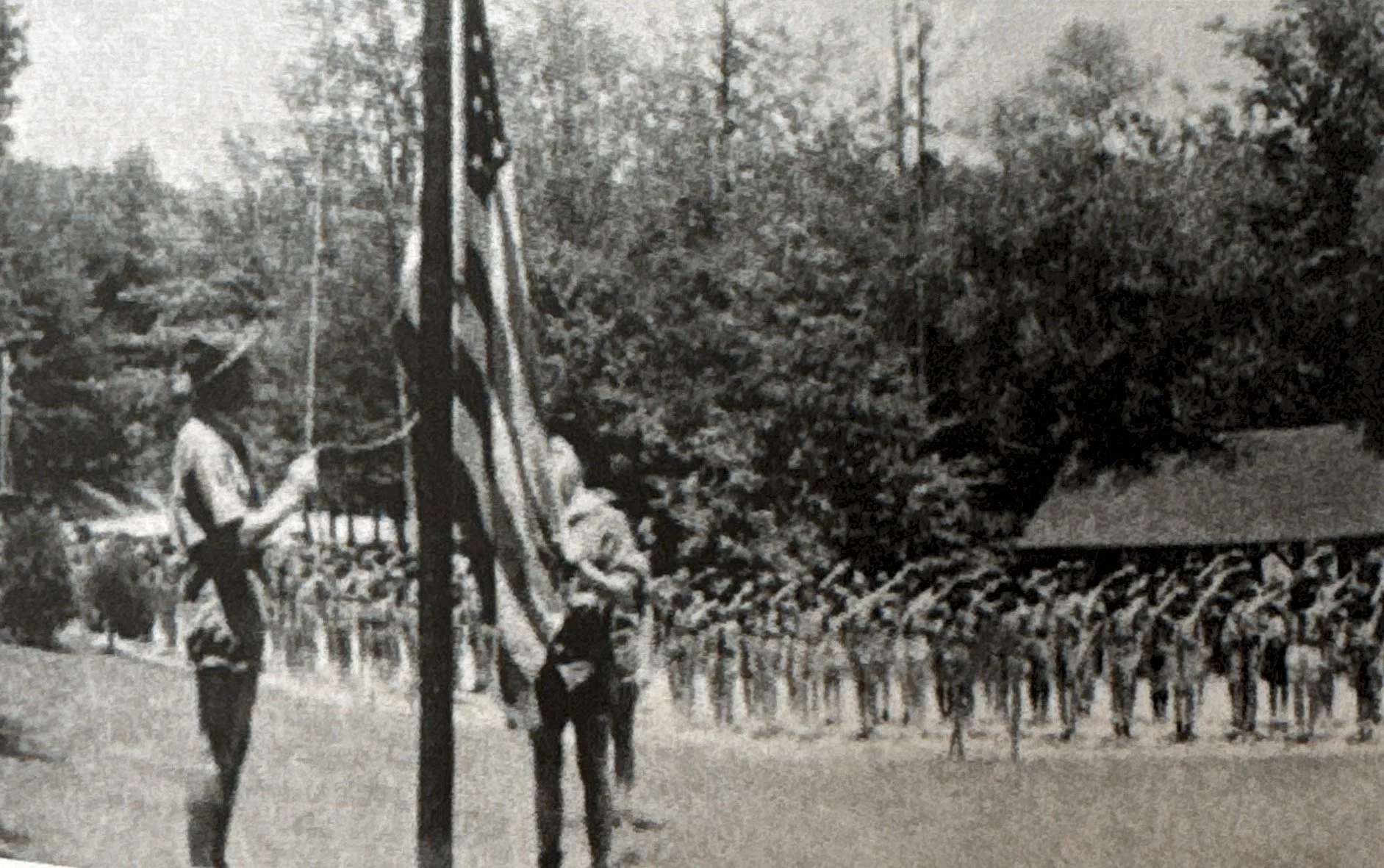
Scouts participating in the flag ceremony, 1941
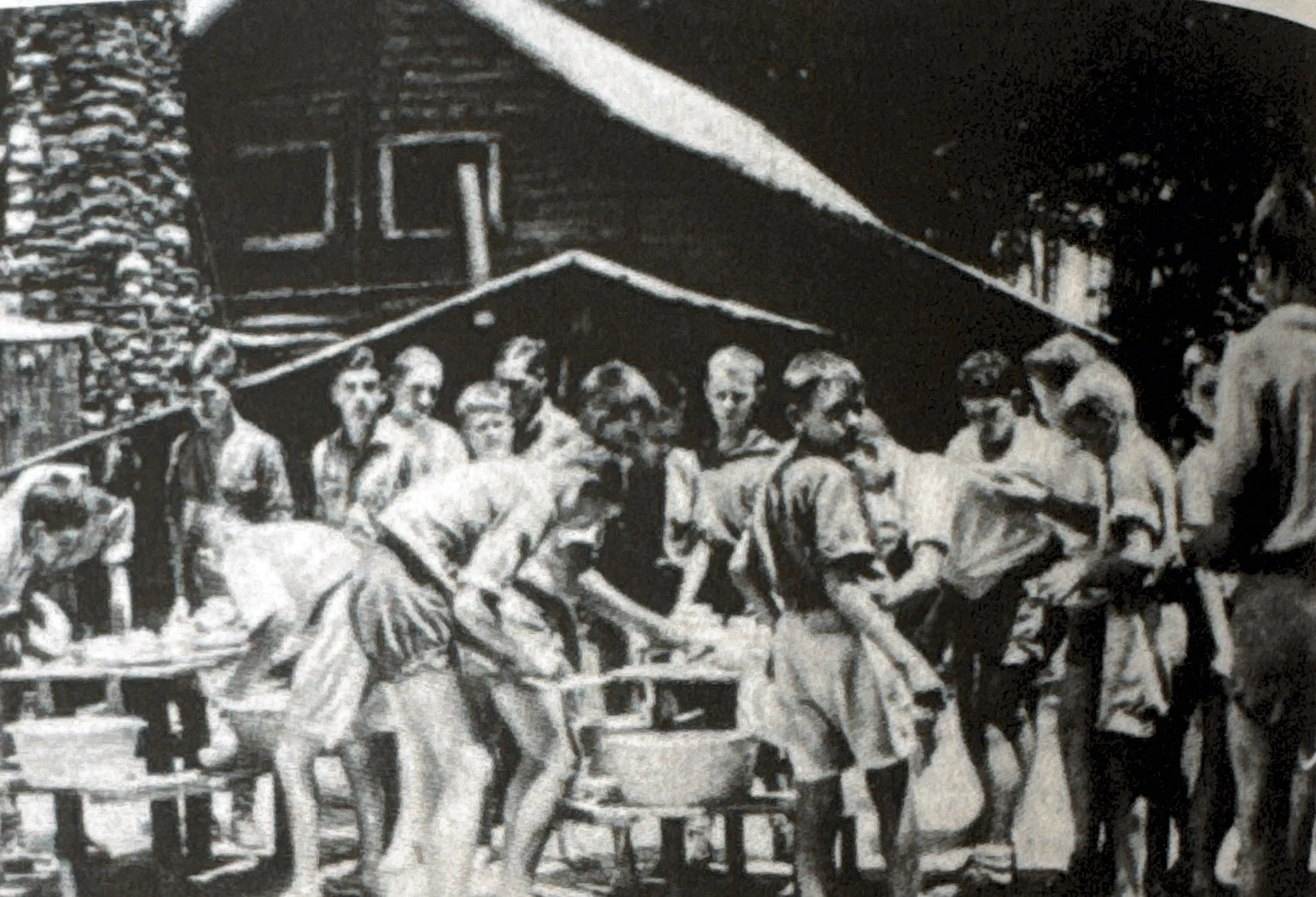
Scouts washing dishes after a meal, 1930s
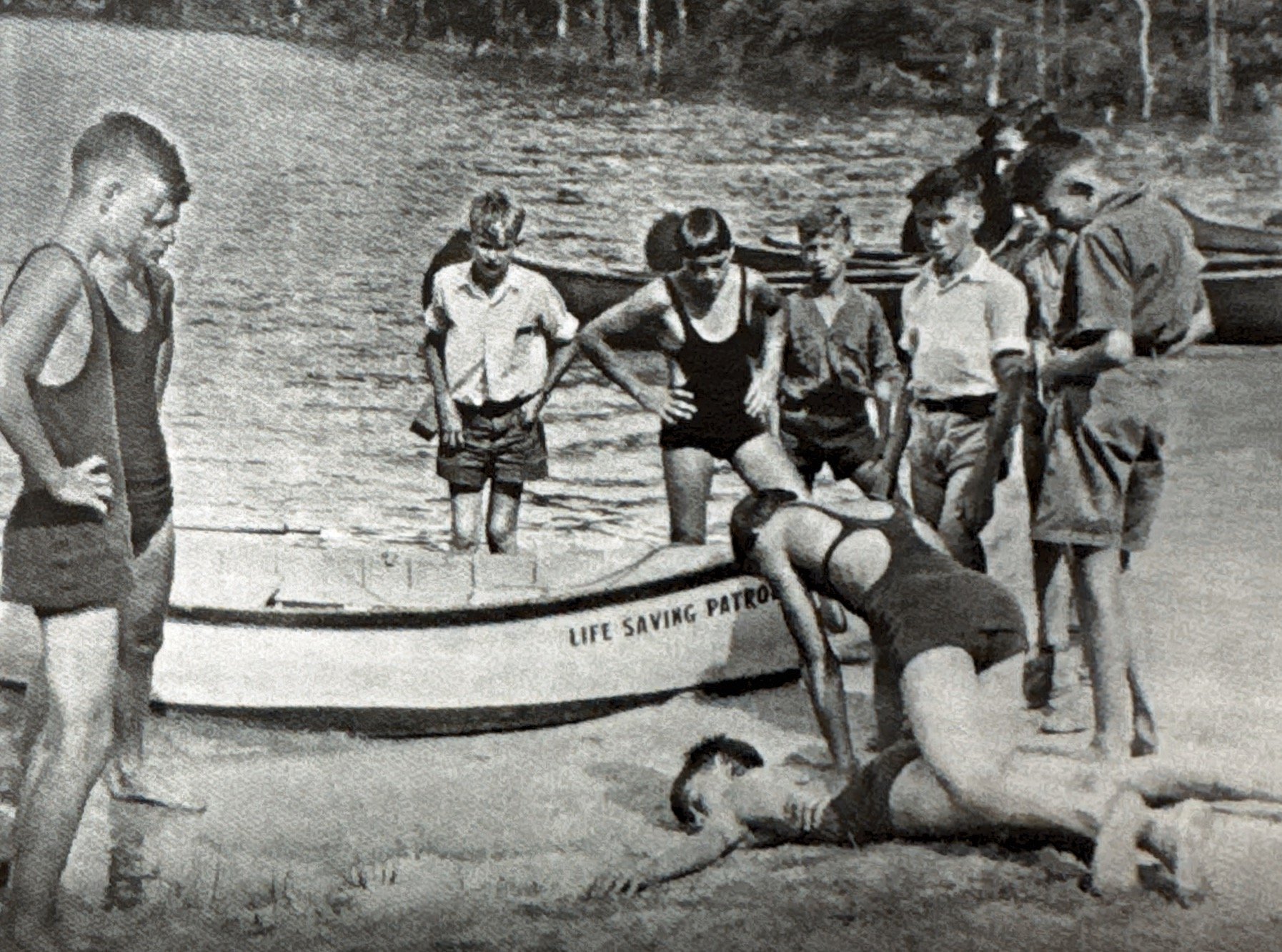
Lifesaving training at the waterfront
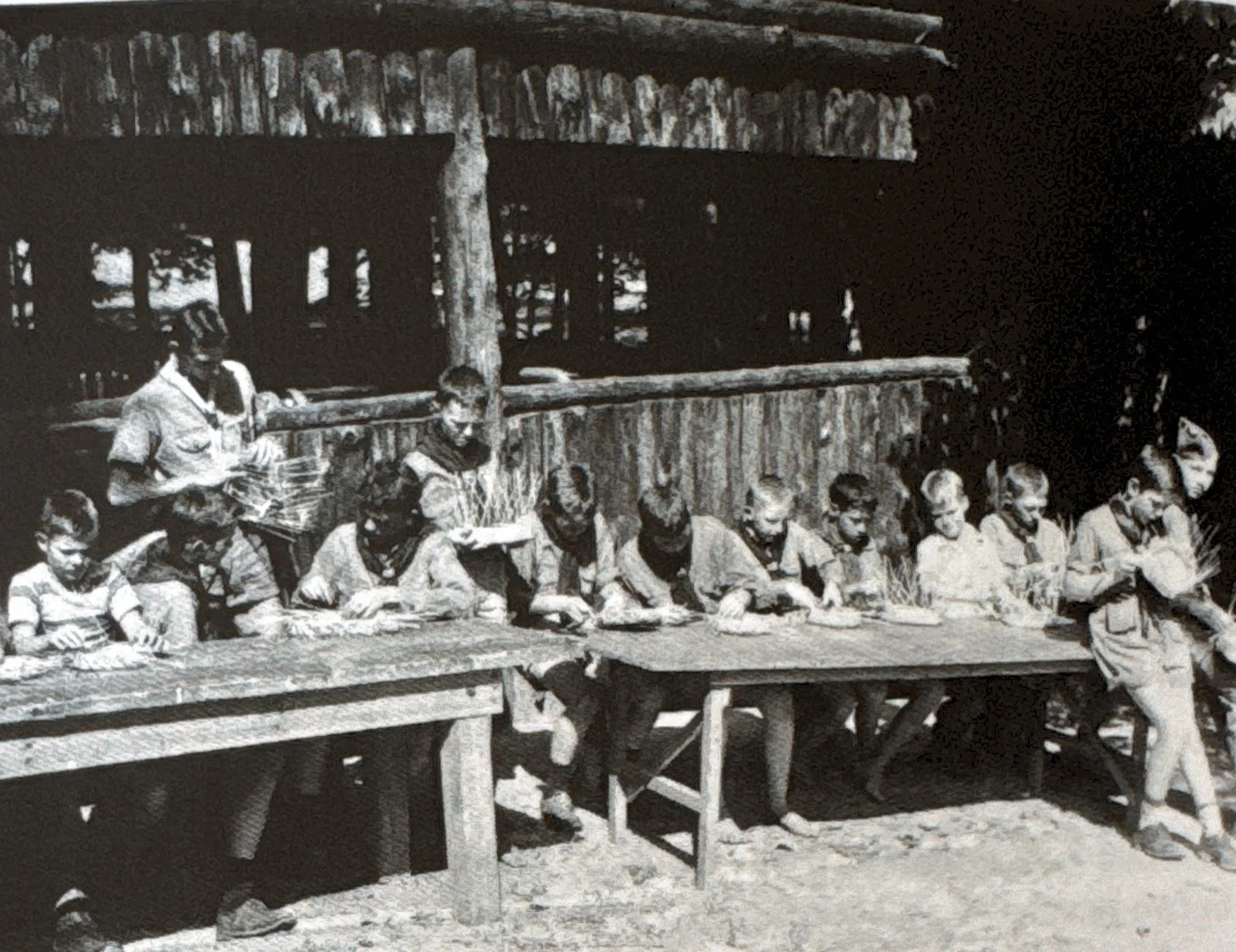
Scouts working on earning their basketry merit badge at the Craft Lodge
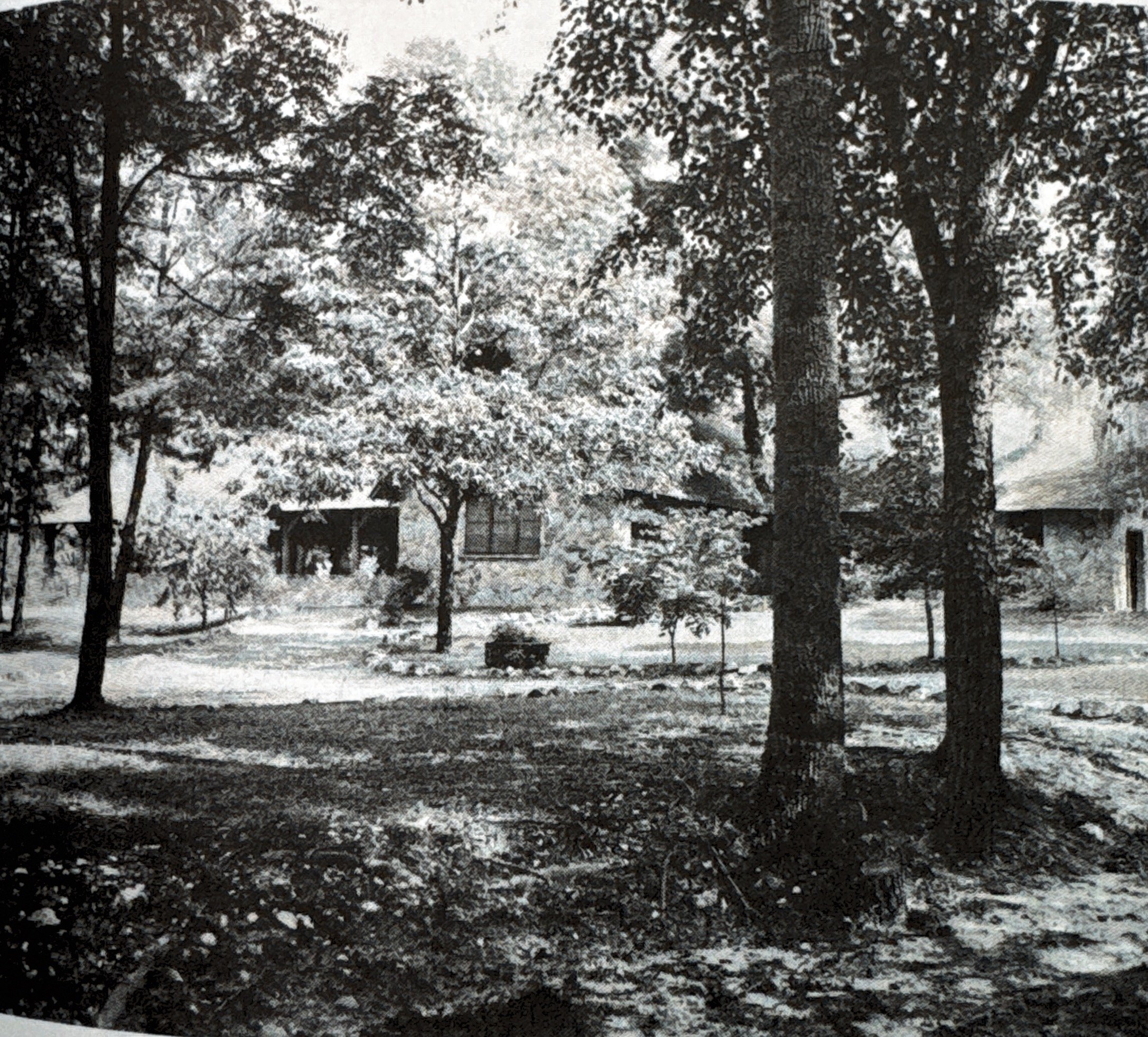
New dining lodge, 1944
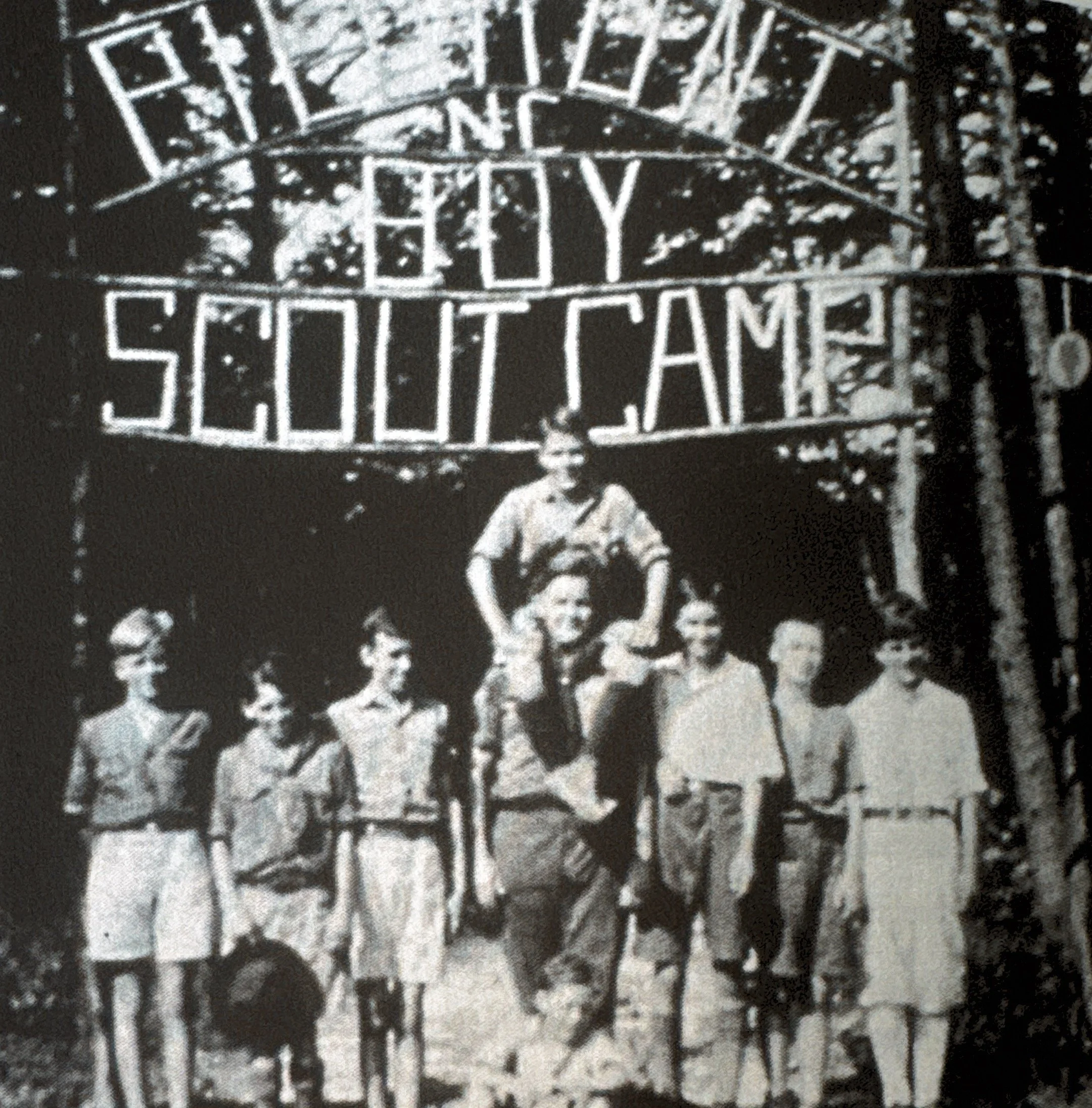
Scouts under the original entrance gate, 1930s
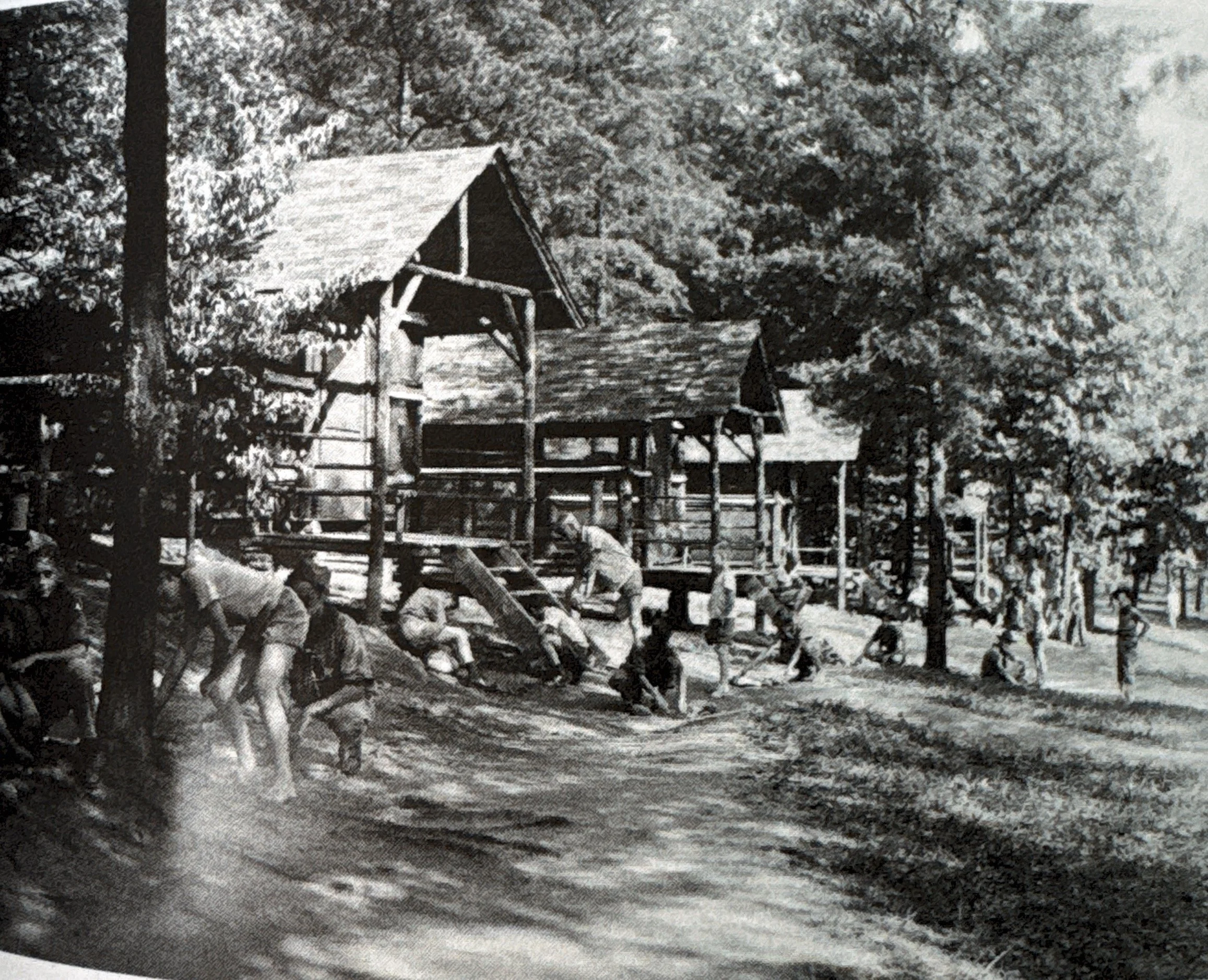
The patrol cabins that housed 8 Scouts each
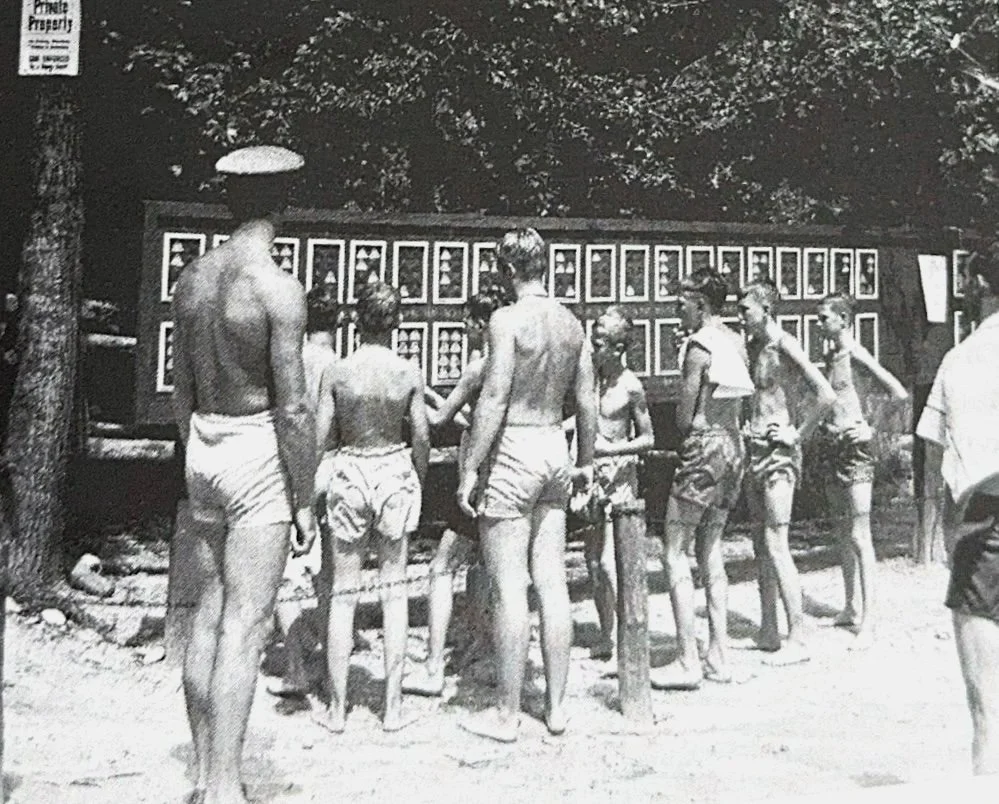
Tag board that was used to keep track of when Scouts entered and left waterfront
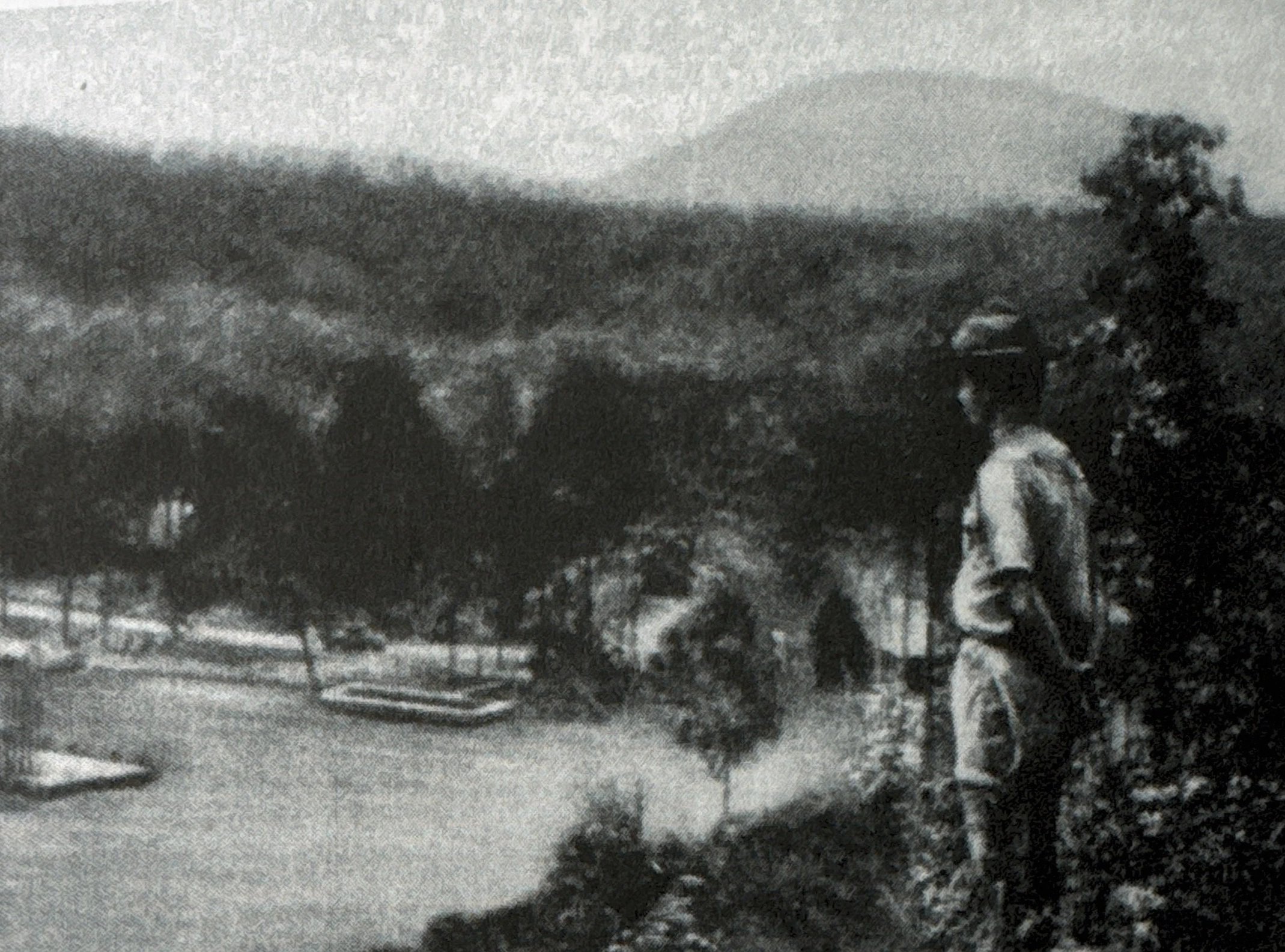
View of PBSC waterfront with Hogback mountain in the background, 1930s
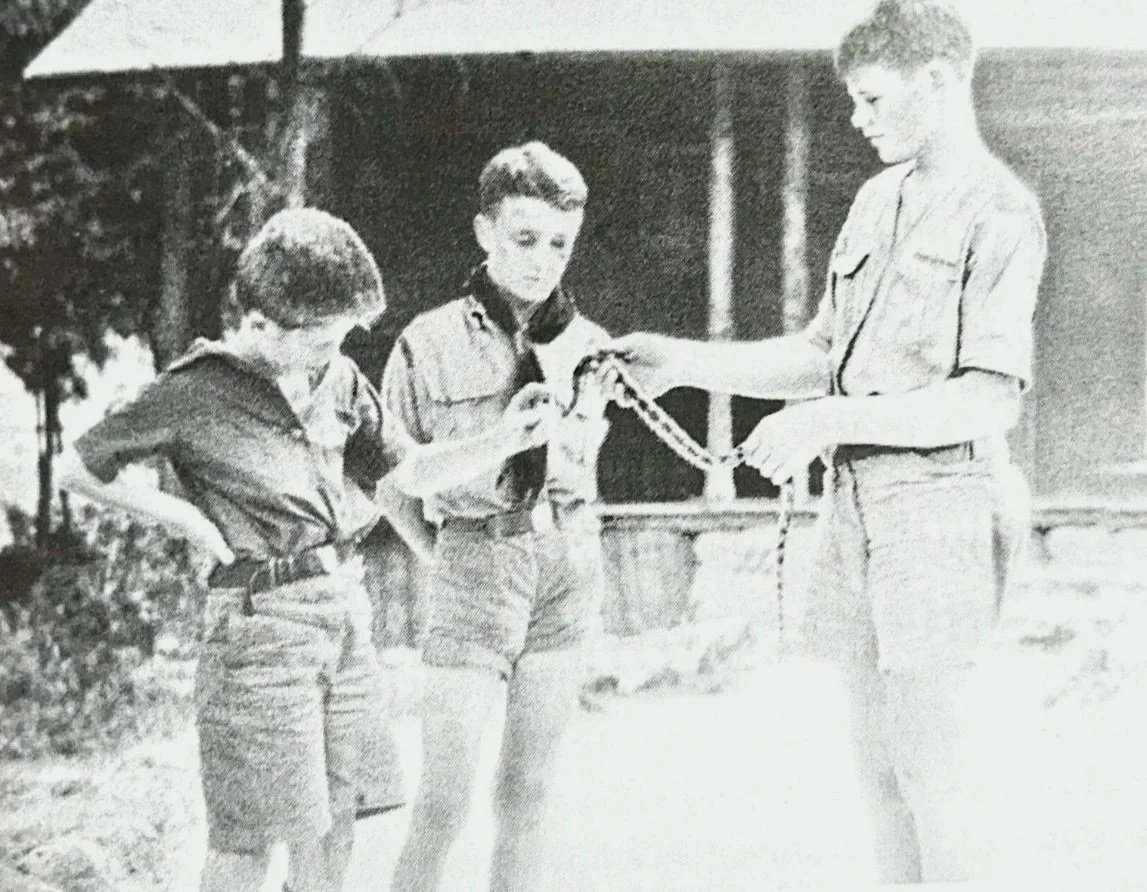
Scouts holding a snake at the Nature Museum
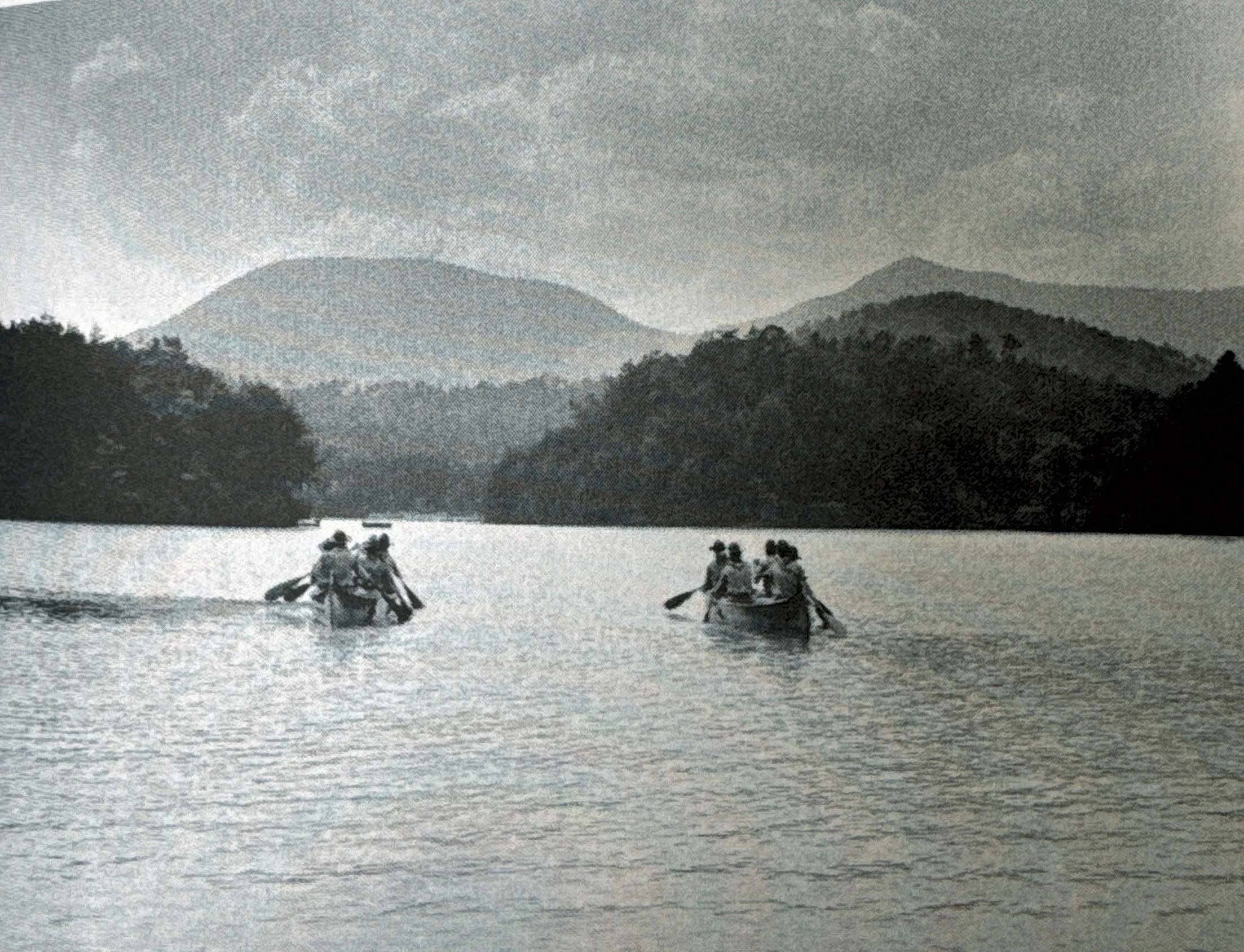
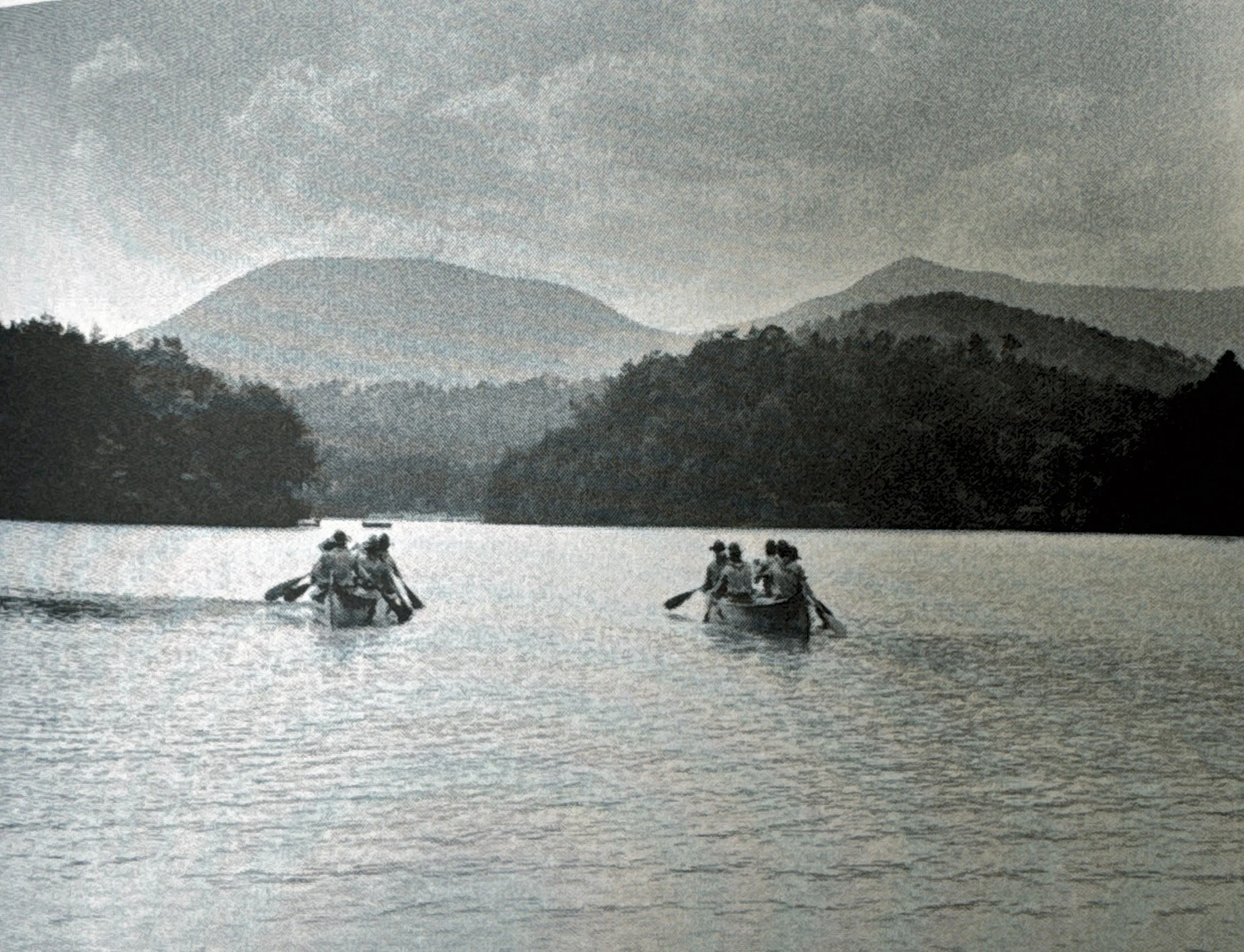
Canoes headed to camp
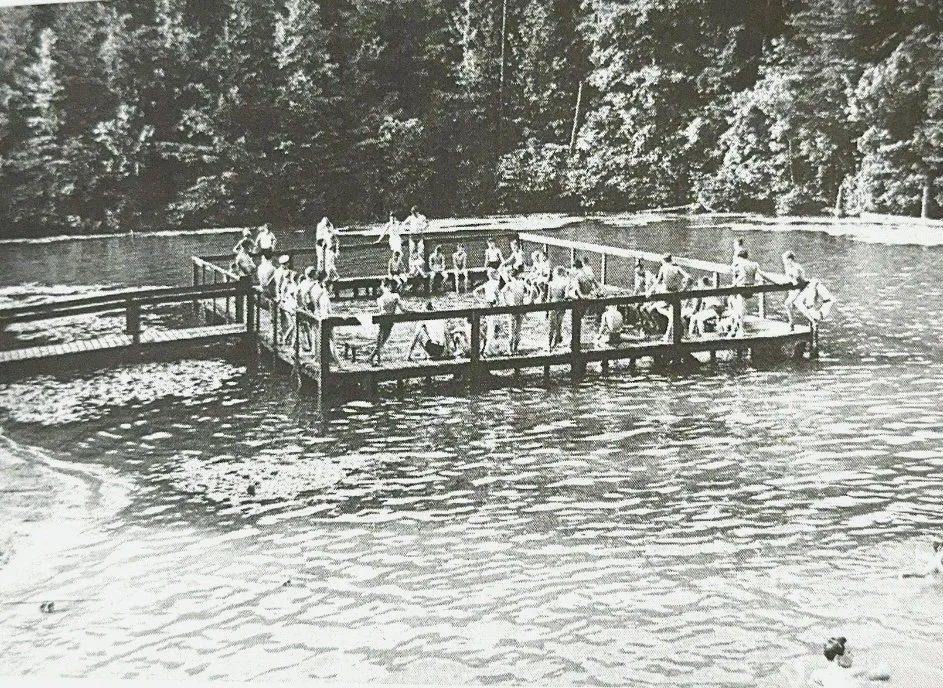
The "crib" that was used to teach Scouts how to swim
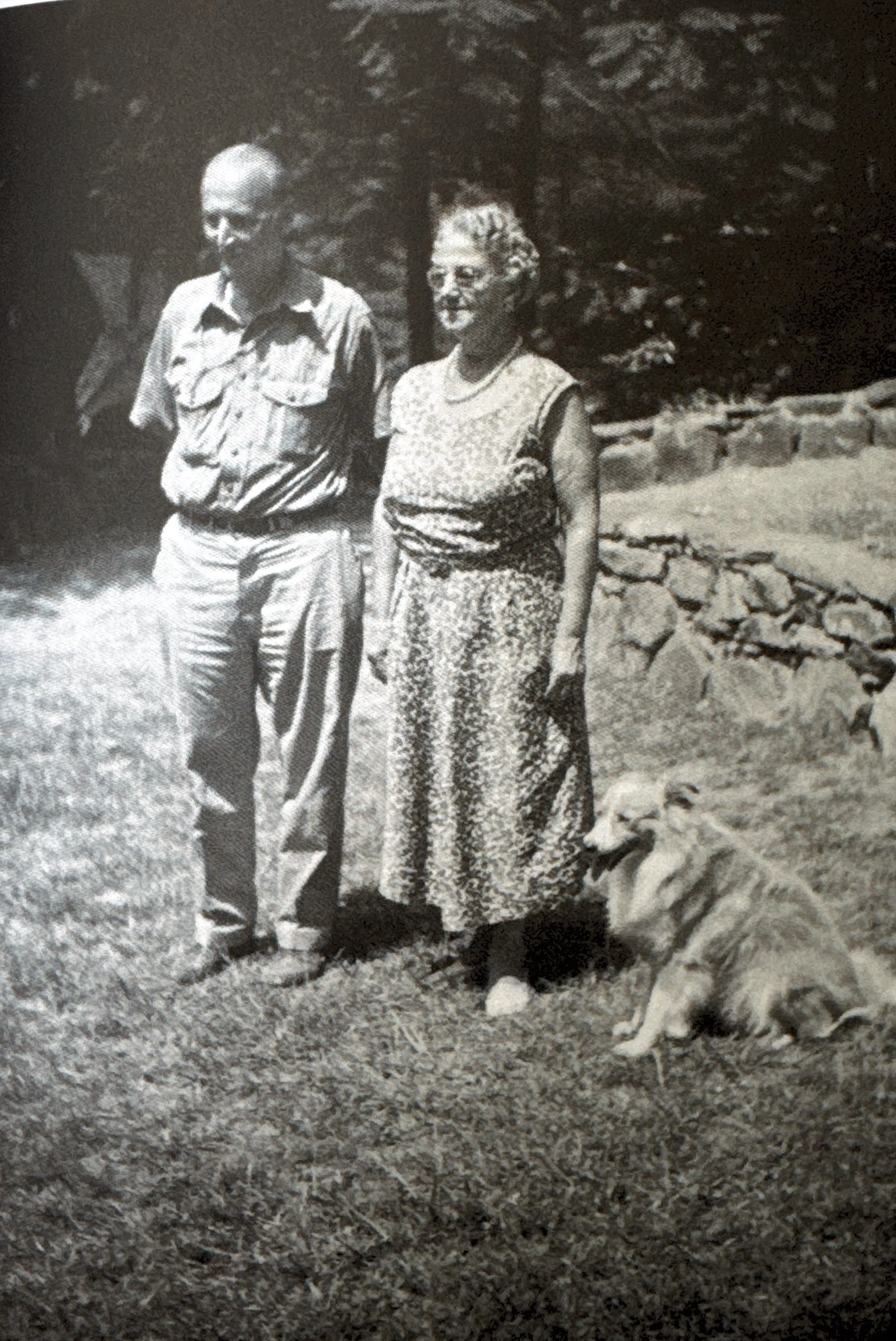
Bud and Lily Schiele with their dog, Buttons, mid-1950s
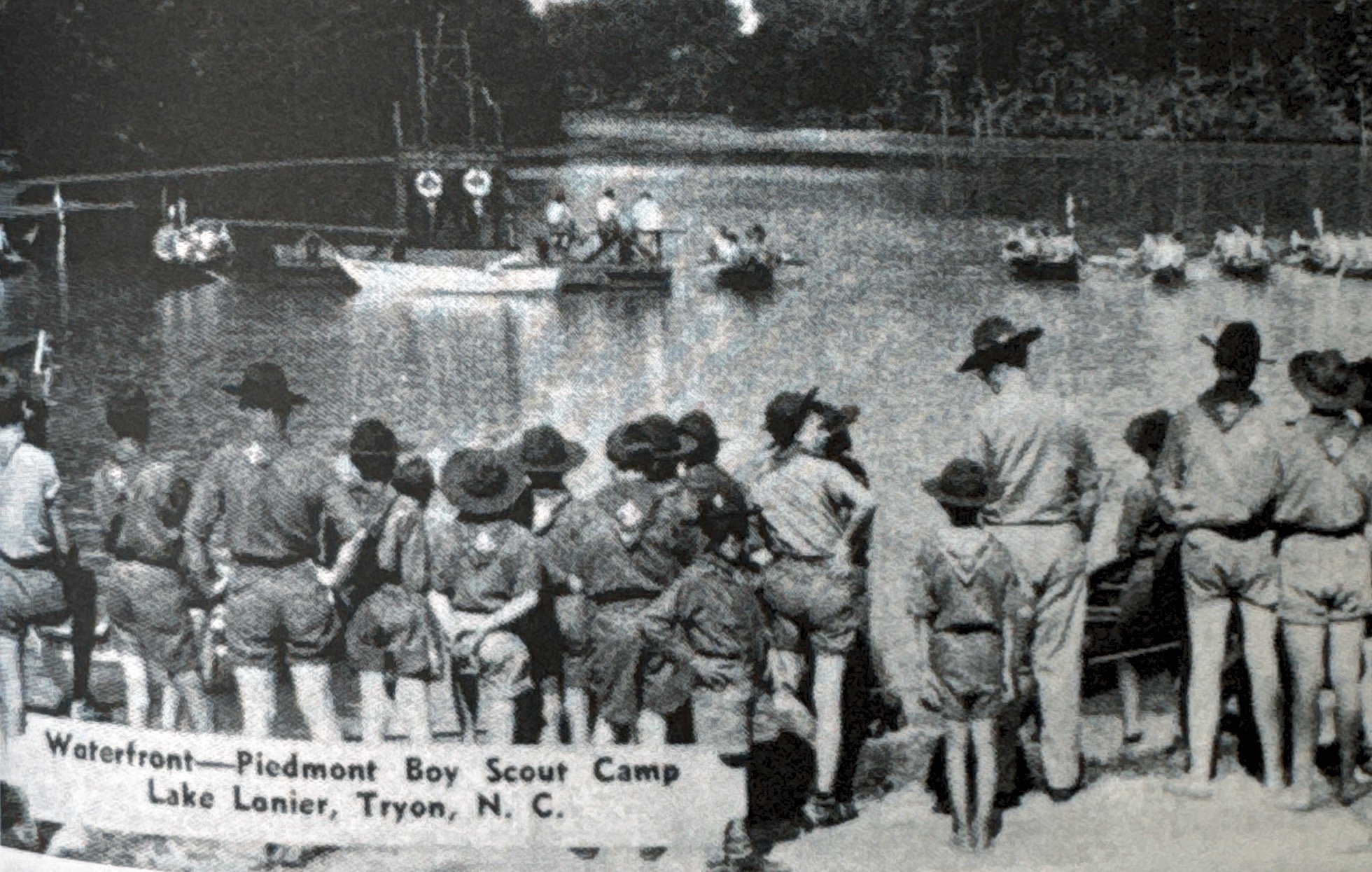
Canoe race, early 1940s
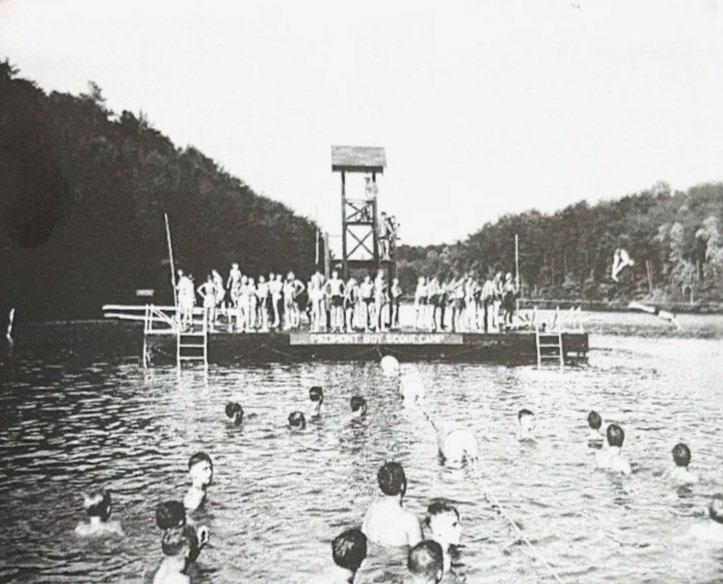
Swimming area and diving structure
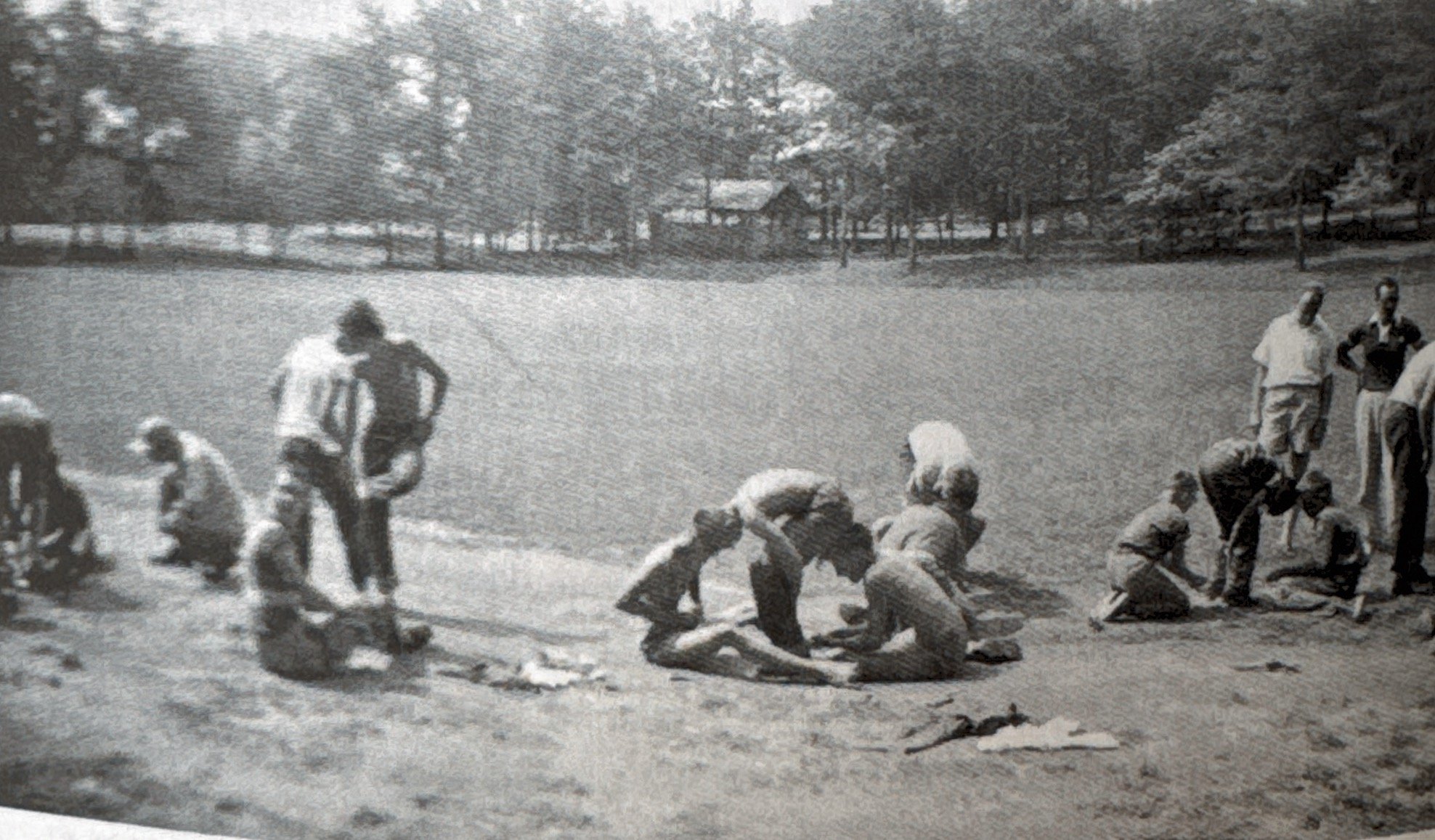
Fire by friction event in camporee
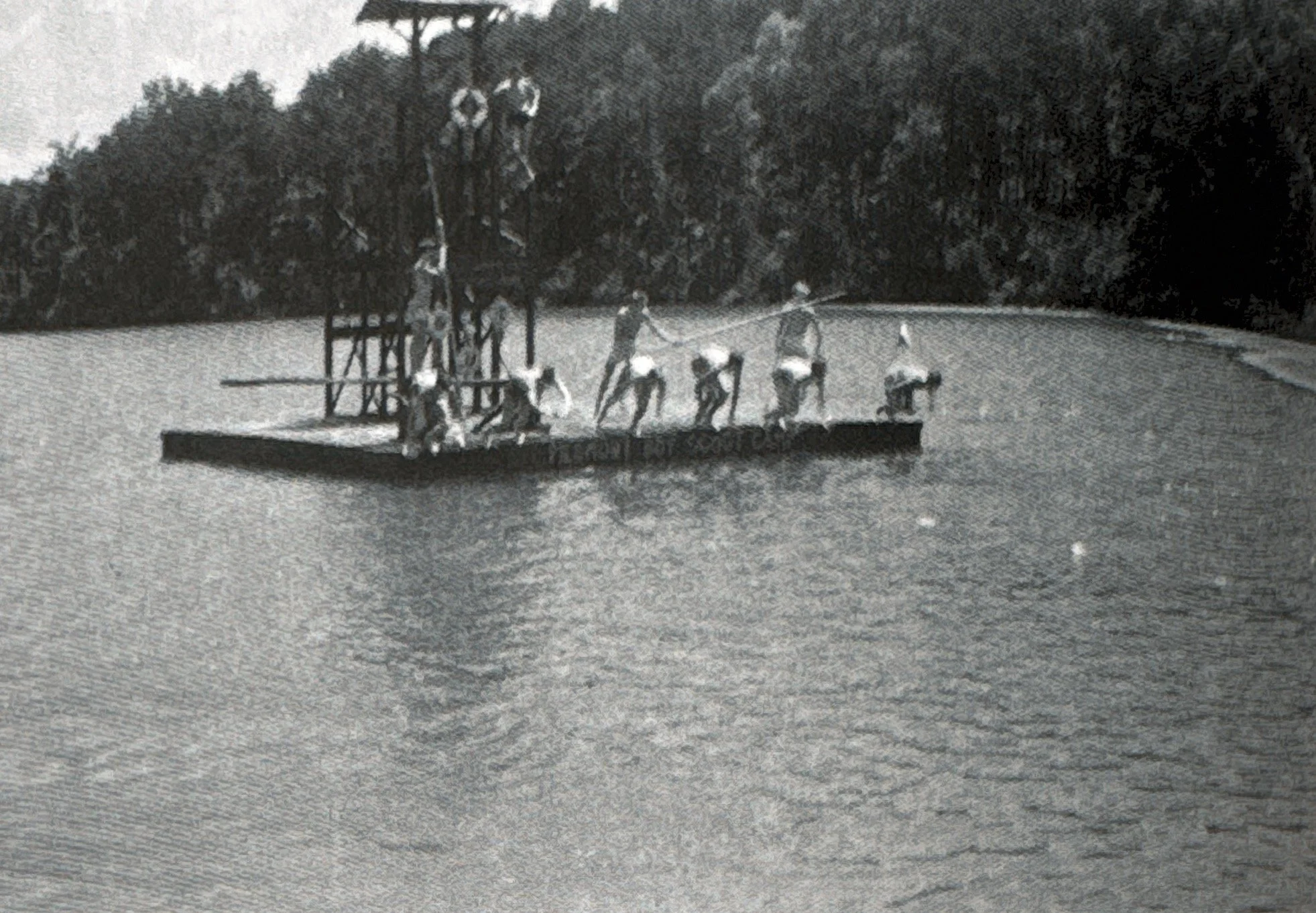
Field Day swim race event
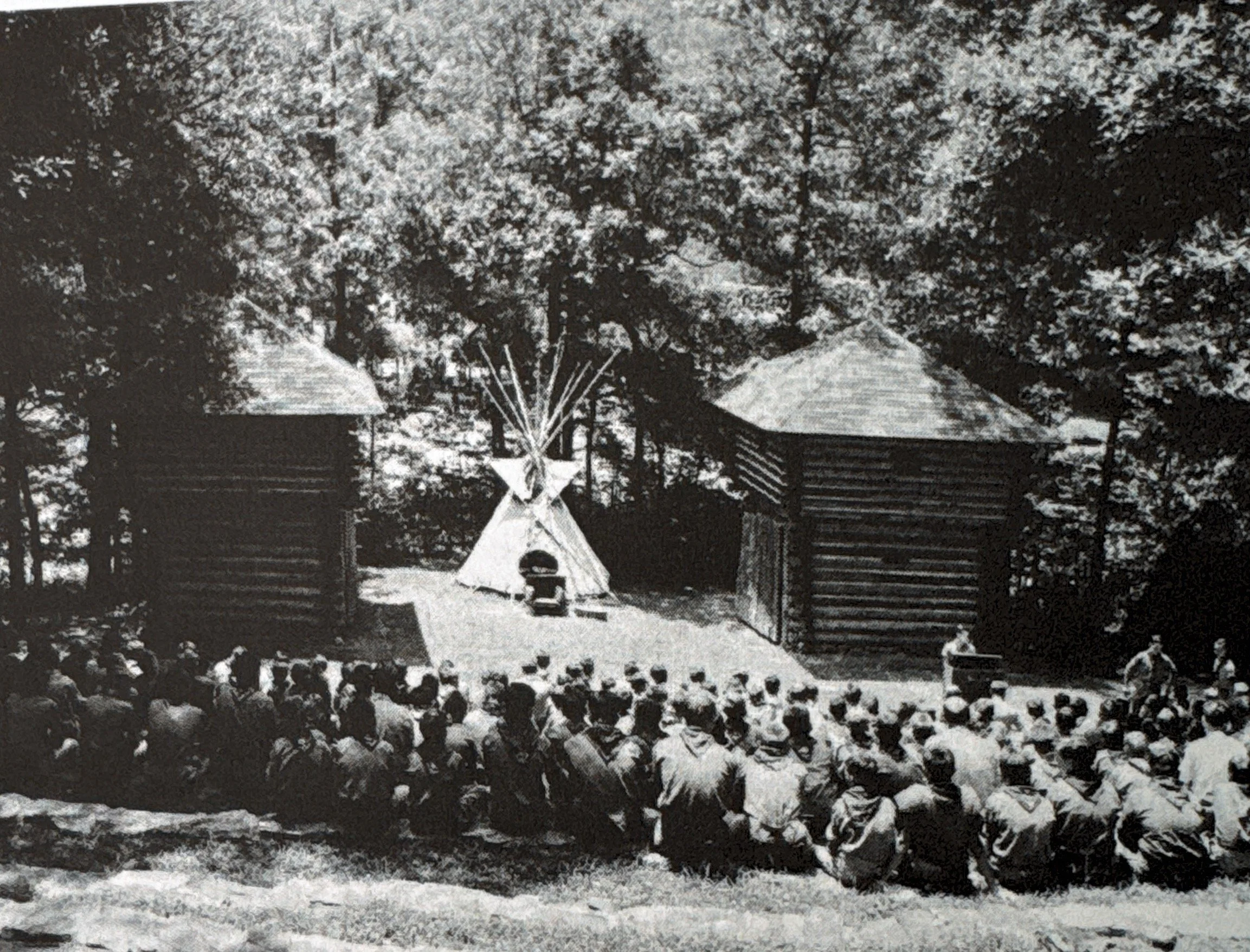
Morning church service in Kistler Memorial Amphitheater
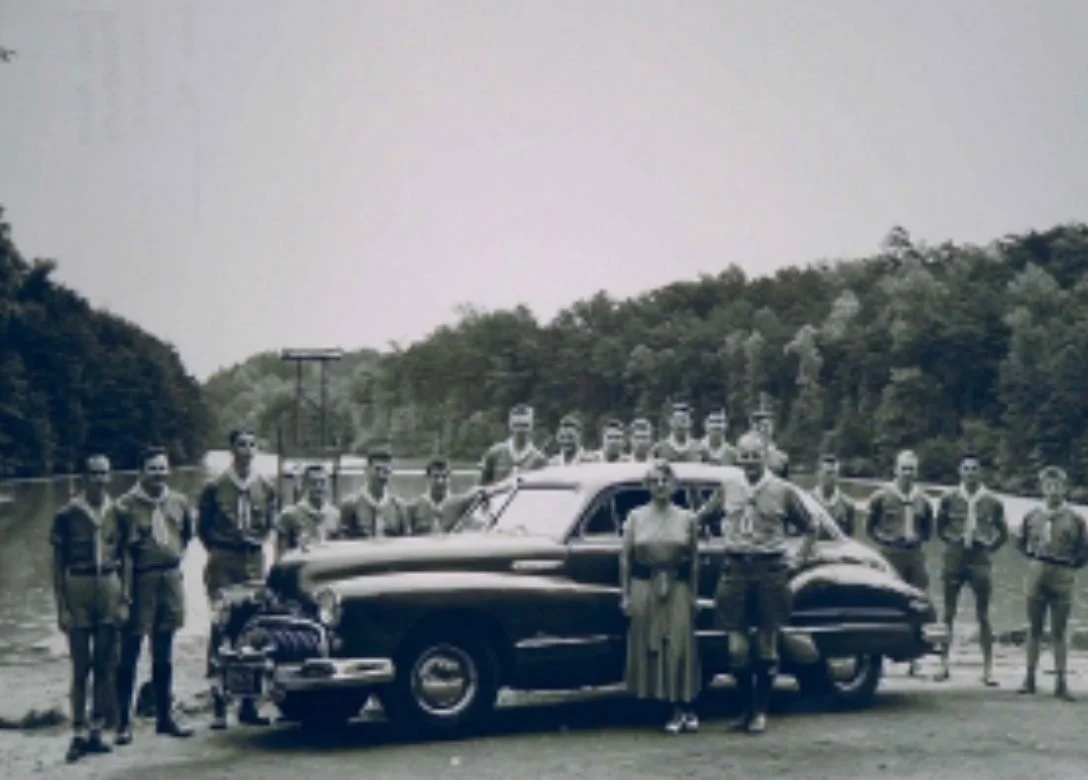
Bud & Lily Schiele with the Scouts
Weekly Schedule
Monday
Scouts arrive at camp.
Merit badge activities.
Counselor-run “songfests” and skits.
Tuesday
Morning Church service (early 1950s).
Merit badge activities.
Troop “songfests” and skits.
Wednesday
Athletic field day (scouts compete in track & field events).
Merit badge activities.
Troop “songfests” and skits.
Thursday
Merit badge activities.
Hiawatha Indian Pageants.
Friday
Troop Camporee (troops compete in basic Scouting skills i.e. fire building, knot-tying, first aid, etc).
Court of Honor ceremony (award merit badges & advances in rank).
saturday
Troops depart.
Counselors clean & restock cabins, bathrooms, etc.
Counselors & service troop campers hike into Tryon for movie and visit the 2 drugstores on the block.
sunday
Church service, counselors are permitted to have family members visit.
Short staff meetings to discuss previous and upcoming weeks.
Camp Bud Schiele
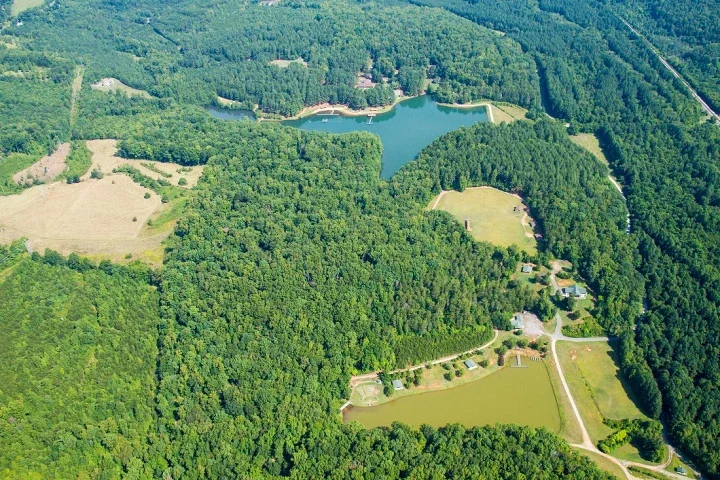
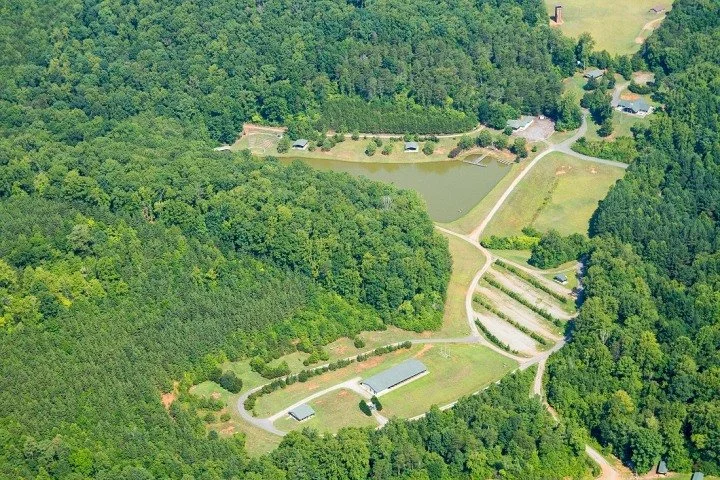
The camp closed in 1981 and moved to a larger plot of land in Rutherfordton, NC, where it opened as Camp Bud Schiele in 1982. This area is also home to the Piedmont Council Reservation, which is 1500 acres and open year-round. It is used to host various activities and events such as off-season camping for troops. The summer camp season is June through August, and is located in the center of the reservation, at Camp Bud Schiele.
According to the website, the Bud Schiele’s fundamental values that were taught at PBSC seem to be still true to this day: “We are determined that if you attend Camp Bud Schiele, not only will you enjoy one of the finest camps in the Southern Region with quality facilities, but a stronger commitment to Scouts and the programs that we offer.”
Dining Hall at Camp Bud Schiele.
After retiring from being Scout Executive, Bud became a ranger-naturalist for the Great Smoky Mountains National Park from 1959 to 1960. For their entire lives, Bud and Lily both had a keen interest in nature, animals, and indigenous people. They spent time traveling across the continent collecting various artifacts, minerals, and other objects relating to the land and its history. Their life-long dream of establishing a museum of natural history became reality after pitching it to Gaston County. He and Lily stated that if they provided the funding for a museum building, he would donate his “entire collection of animals and minerals and offer [his] services for free.” With that promise, Gaston County funded a museum committee and opened the Gaston Museum of Natural History in 1961. In 1964 it was renamed The Schiele Museum of Natural History in order to honor Bud and Lily.
The museum website describes Bud Schiele: “His zest for learning about various environments and the wildlife within continued throughout his life and would nurture a desire to share knowledge with others so they too could understand and appreciate the world around them.”
Schiele museum of natural history
Bud Schiele in his park ranger uniform.
The Schiele Museum of Natural History in Gastonia, NC.
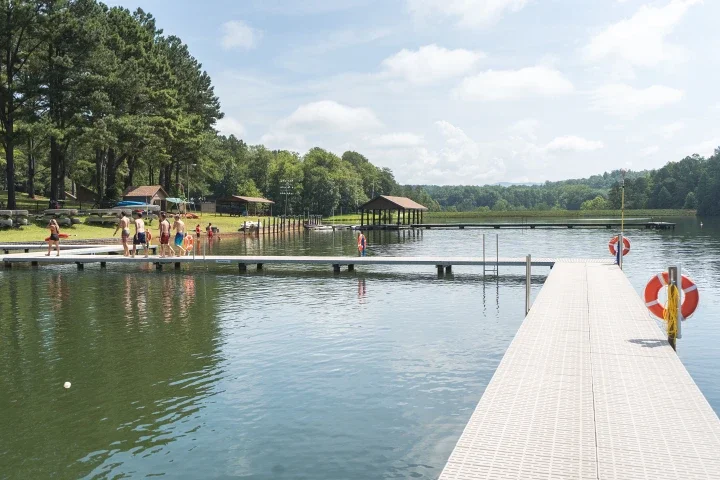
Take a look at these pictures that showcase life at Camp Bud Schiele, courtesy of the camp’s website.
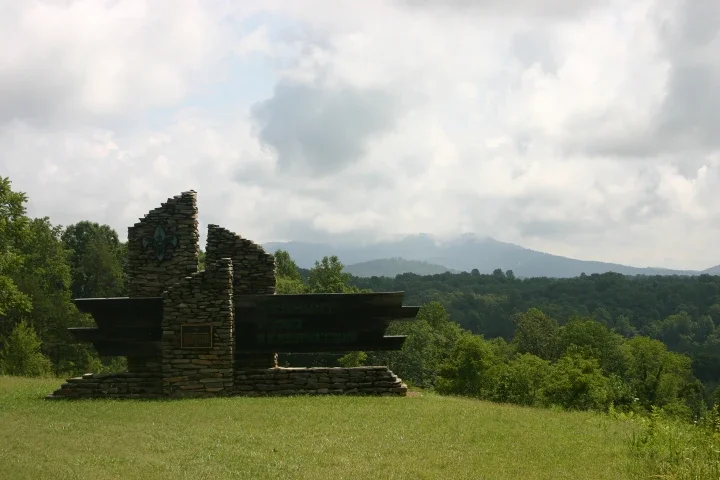
Entrance sign.
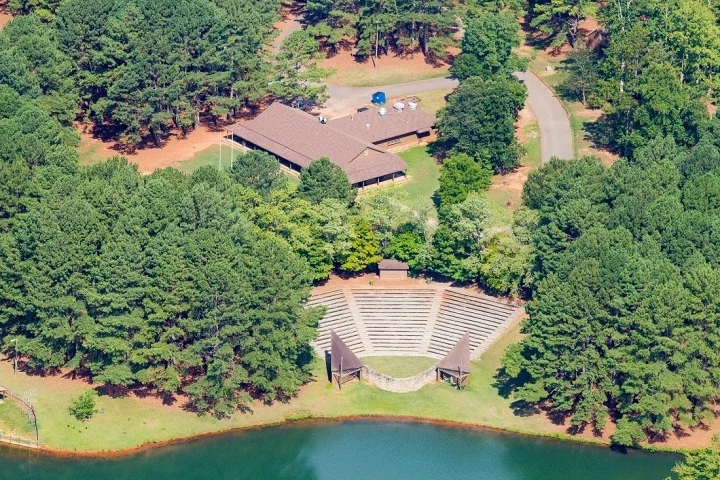
Amphitheater.
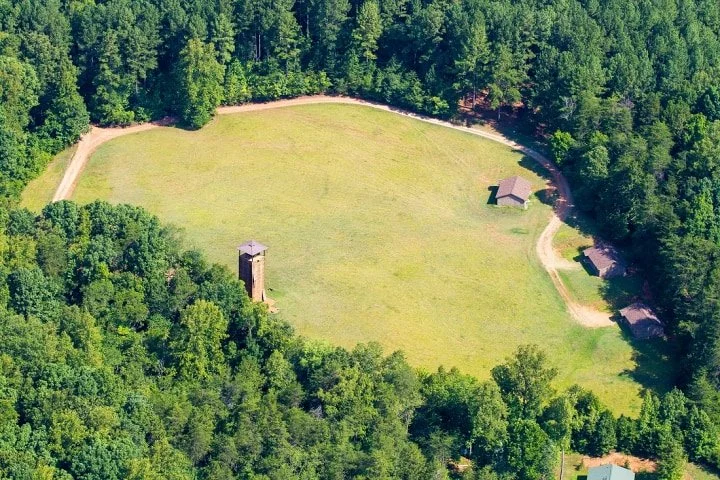
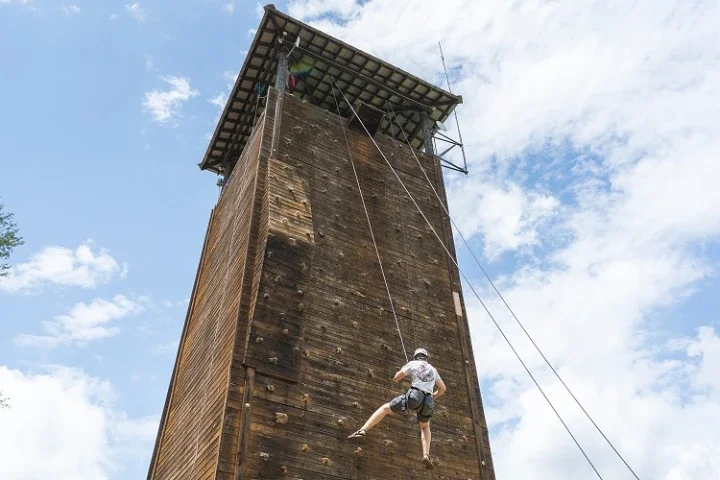
Climbing tower.
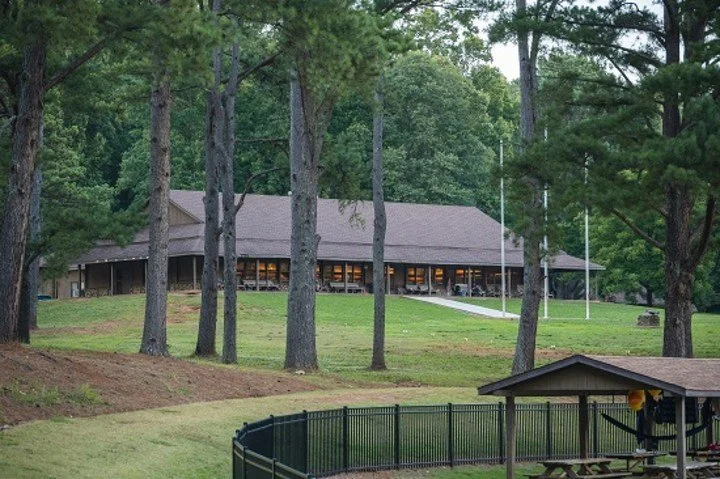
Dining Hall.
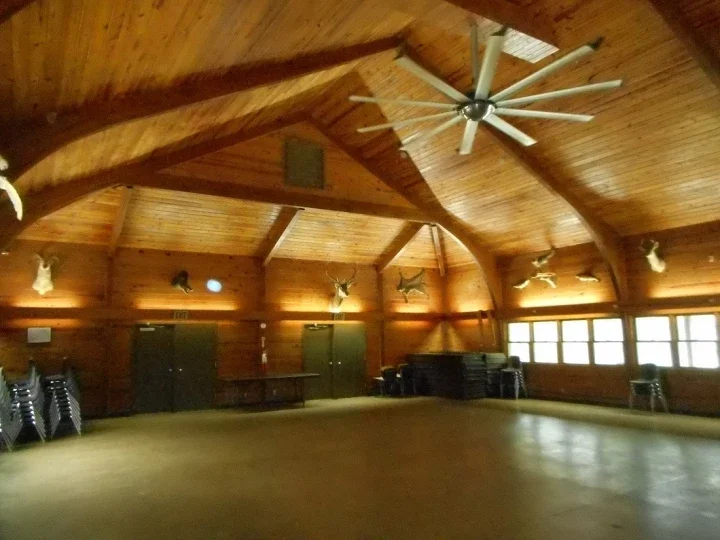
Inside Dining Hall.
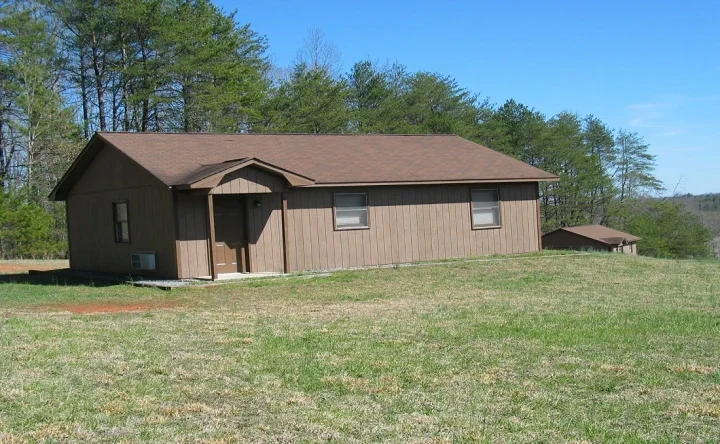
Family cabin.
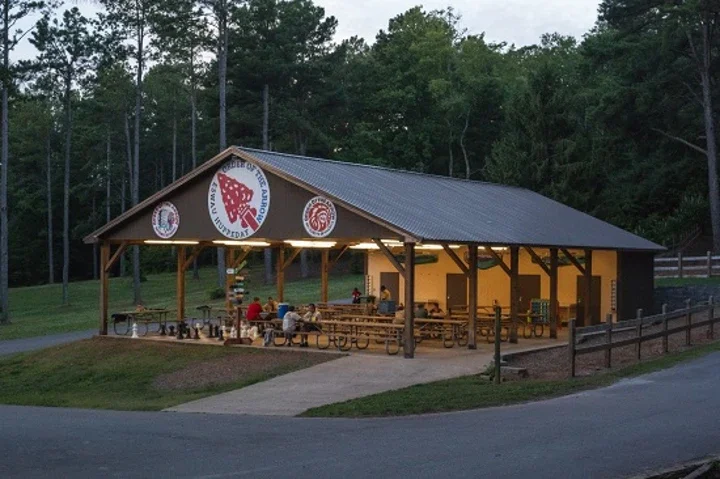
Outdoor activities shelter.
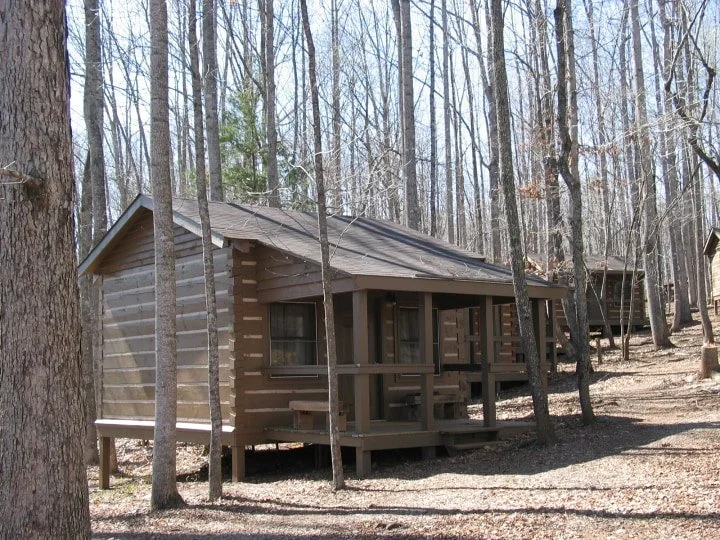
Staff cabins.
Our sources
Boy scouting in the north carolina foothills, 1908-1958
By Harvey James Hamrick, 2019
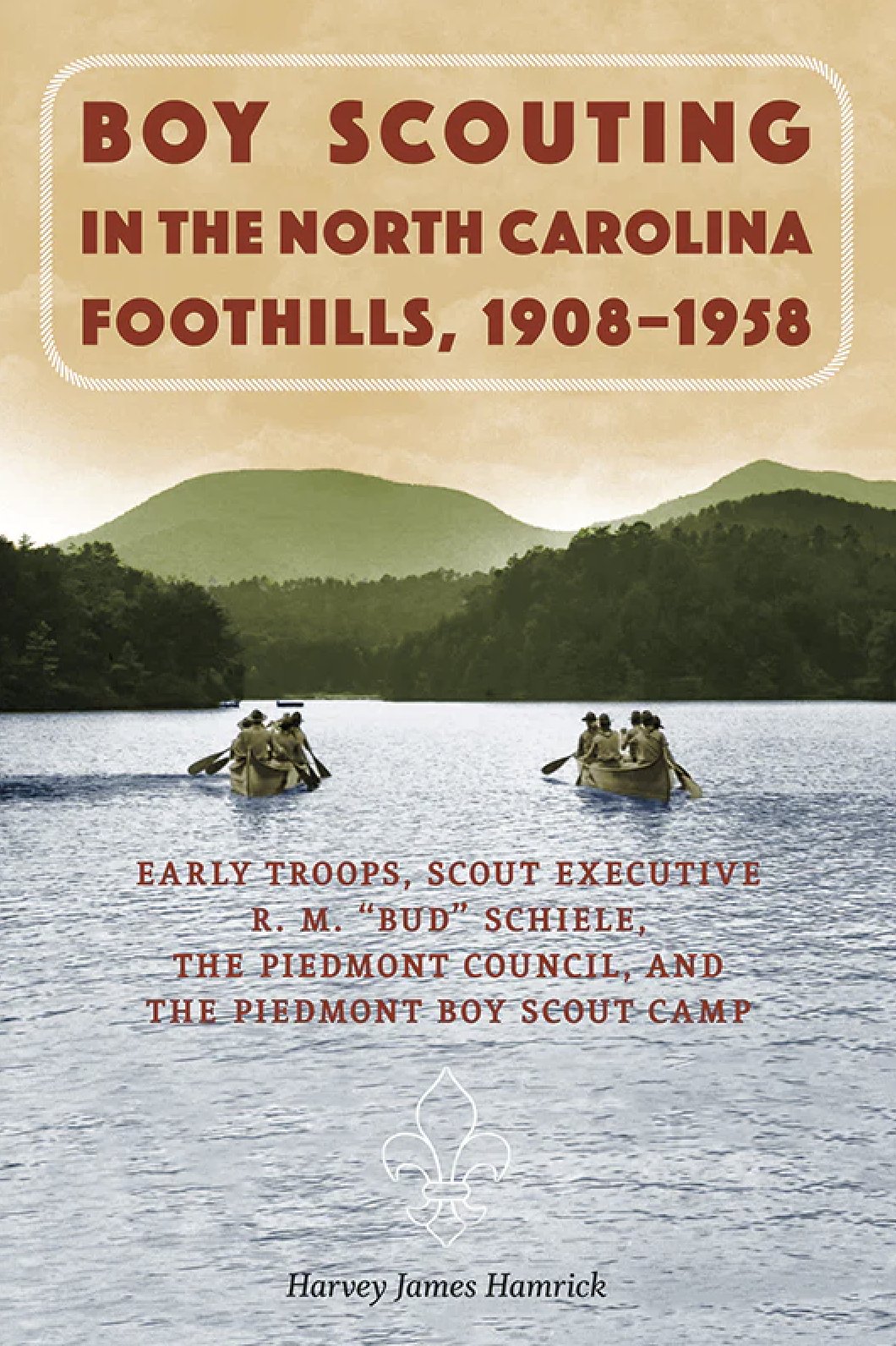
After attending the Piedmont Boy Scout Camp for five years in the 1950s, Harvey Hamrick spent extensive time researching the PBSC and talking to former scouts about their experiences. He discusses the history of Scouting America (formally known as the Boy Scouts of America), the Piedmont Council, and the PBSC.
the schiele museum of natural history
Established 1961
After retiring as Scout Executive, Bud worked as a ranger-naturalist in the Great Smoky Mountains before pursuing his and Lily’s lifelong passion for nature, animals, and indigenous culture. Together, they traveled the continent collecting artifacts and minerals, ultimately proposing a museum to Gaston County. In 1961, the Gaston Museum of Natural History opened with Bud’s donated collection and services, and in 1964 it was renamed The Schiele Museum of Natural History in their honor.
camp bud schiele
Established 1982
The official website for Camp Bud Schiele is the primary location for finding information about the summer camp located in Rutherfordton, North Carolina. There is a brief about section, program guides for the summer camps, staff resource page, and information about using facilities during the off-season.